







Fantasia Truffles - Mushmagic
Magic truffles
€16.99Price
To access our site, you must confirm that you are at least 18 years old.


Imagine you have two samples of dried mushroom in front of you. You analyse them in the laboratory: same psilocybin content, same weight, same species. You administer them to two volunteers with the same set and setting, the same preparation, the same therapeutic support. And the results are different: one describes a markedly anxious experience, the other speaks of euphoria and sustained emotional openness.
How is that possible?
For decades, the conventional answer was: "psychological variables of the subject." And the set —the prior mental state— is undoubtedly a determining factor. But there is another answer that science has been quietly building for years, one that forces us to rethink how we read the label on a mushroom: psilocybin mushrooms do not contain a single active compound. They contain a family of alkaloids that act in concert, and that chemical orchestration may be just as responsible for the profile of the experience as the consumer's psychology.
This guide breaks down that family, molecule by molecule, because what clinical trials are administering —pure synthetic psilocybin— is a deliberately simplified version of what the mushroom contains.
Before discussing effects, it is worth understanding where these compounds come from and why a mushroom produces them.
The psychoactive alkaloids of psilocybin mushrooms are derivatives of tryptophan, one of the twenty essential amino acids that living organisms use to build proteins. Structurally, they all share an indole core — the same molecular backbone as serotonin, the primary neurotransmitter of mood — and it is this structural similarity that allows them to interact with the brain receptors designed for serotonin. They are, in the most literal sense, molecules that the brain mistakes for its own internal language.
The biosynthetic machinery that produces these molecules was described in detail in 2017 by Fricke et al. in Angewandte Chemie: a chain of four enzymes encoded by the gene cluster known as psi, which transforms tryptophan into psilocybin through four successive steps. Each enzyme has a specific function: PsiD decarboxylates the tryptophan, PsiK adds the phosphate group, PsiM introduces the methyl groups, and PsiH performs the final hydroxylation. It is a modular process, elegant in its logic, that biotechnology has already reproduced in laboratory yeasts and bacteria.
But the most unsettling discovery about this biosynthetic pathway came in 2025, in a study published in Nature Chemical Biology by Heim et al.: mushrooms of the genus Psilocybe and those of the genus Conocybe — two evolutionarily distant lineages within the fungi kingdom — developed the ability to synthesise psilocybin in a completely independent way. They did not inherit the same enzymes from a common ancestor: they invented different enzymes that perform the same chemical transformations to arrive at the same end product.
This is known as convergent evolution, and it is relatively rare in biochemistry. That it occurs with a molecule as specific and pharmacologically active as psilocybin suggests there is a powerful selective pressure favouring its synthesis. The most widely held hypothesis is that it serves as a defence against predators or parasites, although this remains an active area of research. What is undeniable is the fact itself: two organisms with no direct ancestral relationship independently "discovered" the same chemical solution. In terms of biochemical complexity, it is a finding in the same conceptual family as the eye of the octopus and the human eye. When life needs something, it tends to find it by multiple paths.
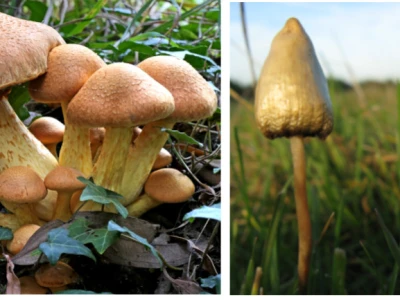
Psilocybin does not belong to just one fungus. It appears in species separated by millions of years of evolution. This article explores how biology found (and shared) the same solution again and again.
Read moreC₁₂H₁₇N₂O₄P · 4-phosphoryloxy-N,N-dimethyltryptamine · 4-PO-DMT
Psilocybin is the most abundant and most stable alkaloid in the family. At room temperature it presents as a white crystalline solid that, in the absence of extreme humidity and direct light, retains between 90 and 95% of its activity for one to two years.
But psilocybin, on its own, does nothing in the brain.
It is what pharmacologists call a prodrug: an inactive molecule designed to be converted into its active form by the metabolism of the receiving organism. When ingested orally, psilocybin is absorbed in the gastrointestinal tract and reaches the liver, where alkaline phosphatases remove the phosphate group and release psilocin. This process, which takes between twenty and sixty minutes, is responsible for the relatively slow onset of effects compared to other psychoactive substances. Oral bioavailability ranges between 52% and 74% according to pharmacokinetic studies reviewed in recent years.
The function of the phosphate group is not merely inconvenient: it makes the molecule more polar, more water-soluble and more stable. Psilocybin is, in a sense, an intelligent delivery system that protects psilocin from degradation until it reaches the place where it needs to act.
C₁₂H₁₆N₂O · 4-hydroxy-N,N-dimethyltryptamine · 4-HO-DMT
Psilocin is the compound that actually occupies the brain's receptors. Without the phosphate group that chains it within psilocybin, it is directly active and acts faster. The downside of this chemical freedom is instability: in the presence of oxygen it oxidises rapidly, taking on brown or black tones. It is this process that explains the famous bluing of mushrooms.
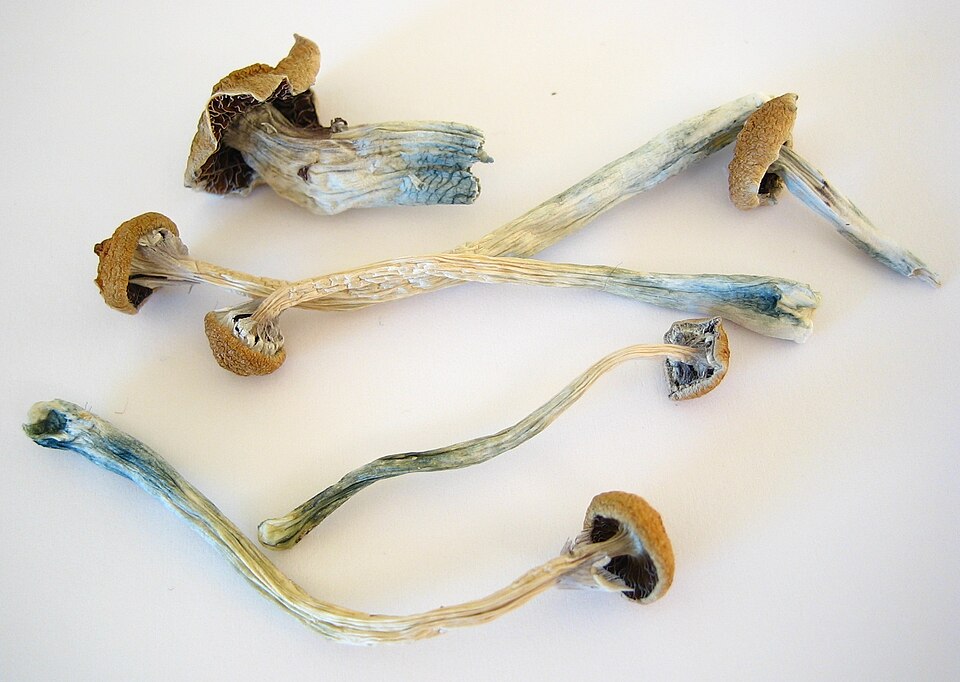
The bluing is worth explaining carefully, because it is probably the most well-known visual phenomenon associated with these mushrooms and was misinterpreted for decades. When a psilocybin mushroom is cut or pressed, psilocin released from the tissue comes into contact with oxygen in the air and oxidises to form blue indigo quinones. This mechanism was precisely characterised for the first time in 2020 by Dirk Hoffmeister's team at the University of Jena: the resulting compounds are chemically distinct from psilocin and have no known psychoactive activity. But their presence is the most reliable visual indicator that the mushroom contains active alkaloids. The intensity of the bluing is not proportional to potency, but its absence almost always indicates an absence of psilocin.
In the brain, psilocin acts primarily as an agonist at serotonin type 2A receptors (5-HT₂A), found at high density in layer V of the prefrontal cortex and in limbic regions. But the pharmacology of psilocin is more promiscuous than that headline suggests: it also shows affinity for subtypes 5-HT₁A, 5-HT₂C, 5-HT₆ and 5-HT₇, as well as dopaminergic (D₂, D₃) and adrenergic (α₂) receptors. This network of interactions contributes to the richness and variability of the effects profile: it is not that the mushroom presses a single neuronal button, but that it tunes a complex instrument.
Neuroimaging studies have documented two simultaneous phenomena under psilocin that are particularly illuminating. On one hand, there is a hyperconnectivity between brain regions that do not normally communicate with each other: the visual cortex speaks to the auditory, the sensory to the motor, the temporal lobe to the frontal. On the other, there is a marked suppression of the Default Mode Network (DMN) — the circuit that manages the narrative of the self, ruminative thinking and personal identity. The DMN is, in a very concrete sense, the network that maintains the story we tell ourselves about who we are. Its inhibition under psilocin correlates directly with the subjective experience of ego dissolution, and also — this is what is clinically relevant — with the magnitude of the antidepressant effect observed in therapeutic trials. This phenomenon is explored in depth in the analysis on the clinical applications of psilocybin.
More new connections, less control from the habitual self. That double mechanism is the neurobiological basis of both mystical experiences and the antidepressant effect.
C₁₁H₁₅N₂O₄P · 4-phosphoryloxy-N-methyltryptamine
Baeocystin is structurally the mono-methylated version of psilocybin: a single chemical difference that makes it the third most studied alkaloid in the family. It was first described in 1968 by Repke et al. in Psilocybe baeocystis, the species that gives it its name, and has since remained in a kind of scientific limbo: too present to ignore, too little studied to characterise well.
In some species, baeocystin can reach concentrations comparable to psilocybin. P. baeocystis can contain between 0.10% and 0.18% dry weight; P. semilanceata, the well-known liberty cap of European meadows, reaches 0.42% in some analyses. These are not trace amounts.
But what does it actually do? This is the question that the scientific literature answers with an honesty that deserves to be conveyed without softening: we do not know with certainty. Studies in rodents suggest it produces mild psychoactive effects at equivalent doses. A controlled study from 2020 (Sherwood et al. in ACS Pharmacology & Translational Science) found no statistically significant differences between psilocybin alone and psilocybin plus baeocystin in animal behavioural models. But a negative result in mice does not rule out a synergistic effect in humans. The pharmacology of context — how one molecule modifies the response to another — is one of the most difficult territories to study in psychopharmacology, and animal models have clear limitations when the object of study involves subjective experience.
C₁₀H₁₃N₂O₄P · 4-phosphoryloxytryptamine
Norbaeocystin is the most basic form of the psilocybin alkaloid scaffold: with no methyl group on the nitrogen. Its concentrations in mushrooms are usually the lowest in the family, rarely above 0.05% dry weight. Its low lipid solubility — the property that allows molecules to cross cell membranes, including the blood-brain barrier — suggests limited direct cerebral penetration.
This does not exclude a role as a metabolic precursor: mushrooms might use it as a starting point for synthesising the other alkaloids, which would mean its concentration is inversely proportional to the biosynthetic efficiency of the organism. There is also the possibility that it acts as an allosteric modulator — a molecule that does not directly activate a receptor but alters how other compounds do — although this hypothesis does not yet have direct evidence.
C₁₂H₁₉N₂O₄P · N,N,N-trimethyl-4-phosphoryloxytryptamine
Aeruginascin deserves special attention, because it is the compound that most directly challenges the simplified model of "psilocybin does everything."
It was identified in 1985 in Inocybe aeruginascens, a modest-looking species with a mainly European distribution that was long classified as non-psychoactive — or dangerously toxic — until chemical analyses revealed that it contains psilocybin levels comparable to Psilocybe species. What caught researchers' attention was the discrepancy between alkaloid content and reported effects: those who consumed I. aeruginascens — in many cases accidentally, confusing it with edible mushrooms — invariably described a markedly euphoric experience, with an almost complete absence of anxiety and nausea.
German researcher Jochen Gartz was the first to propose, in the nineties, that the compound responsible for this differential profile was aeruginascin: a compound that, unlike all other psilocybin alkaloids, does not act as an agonist at the 5-HT₂A receptor but as an antagonist at the 5-HT₃ receptor.
The 5-HT₃ receptor is the only ionotropic serotonin receptor — it acts as an ion channel, not a G-protein-coupled receptor — and is involved in mediating nausea, vomiting and certain aspects of emotional processing, particularly anticipatory anxiety. 5-HT₃ antagonists are drugs widely used in oncology precisely to reduce chemotherapy-induced nausea. Gartz's hypothesis — that aeruginascin modifies the profile of the experience by blocking this receptor — has genuine pharmacological coherence, although direct evidence in humans remains observational.
The therapeutic implication is immediate: if aeruginascin reduces the likelihood of adverse experiences by blocking 5-HT₃, it could be a component of great value in designing therapeutic protocols. Current trials from Compass Pathways, MAPS and other groups work exclusively with pure synthetic psilocybin. There is no aeruginascin. This exclusion is methodologically understandable — studying an isolated compound is methodologically simpler — but it means we do not know whether pure psilocybin is the optimal formulation for therapeutic use.
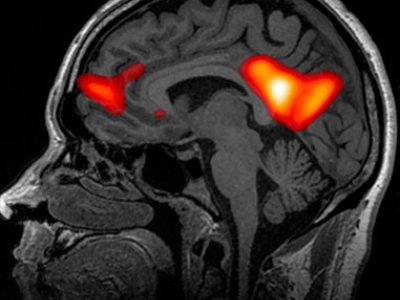
Psilocybin has gone from being a banned drug to a promising clinical tool. We explore how it is redefining the treatment of disorders such as depression, anxiety and addiction.
Read moreThe complete family, at a glance:
| Alkaloid | Formula | Typical concentration (% DW) | Primary receptor | Proposed function |
|---|---|---|---|---|
| Psilocybin | C₁₂H₁₇N₂O₄P | 0.1 – 1.0 | 5-HT₂A (prodrug) | Central alkaloid. Psilocin reservoir. Primary psychedelic action. |
| Psilocin | C₁₂H₁₆N₂O | 0.01 – 0.6 | 5-HT₂A (direct agonist) | True active metabolite. Faster onset when free. |
| Baeocystin | C₁₁H₁₅N₂O₄P | 0.01 – 0.5 | 5-HT₂A (mild) | Proposed modulator. High variability between species. |
| Norbaeocystin | C₁₀H₁₃N₂O₄P | Traces < 0.05 | Partially unknown | Possible precursor or allosteric modulator. |
| Aeruginascin | C₁₂H₁₉N₂O₄P | 0 – 0.5 (species-variable) | 5-HT₃ (antagonist) | Blocks nausea. Modulates emotional tone. Linked to euphoric experiences. |
| β-Carbolines | Various | Traces | Mild MAOI | Possible effect extension through inhibition of hepatic metabolism. |
| Phenethylamines | Various | Traces | Dopaminergic / adrenergic | Energising. Rarely quantified. |
Concentrations expressed as percentage dry weight (% DW), the standard convention in analytical literature.
β-Carbolines — harmine, harmaline, tetrahydroharmine — are monoamine oxidase inhibitors (MAOIs) found at trace concentrations in some psilocybin mushrooms, documented in the study by Blei et al. (2020) in Chemistry – A European Journal. Their presence in the mushroom immediately invites comparisons with ayahuasca, which uses plants rich in β-carbolines precisely to inhibit the hepatic breakdown of DMT. In mushrooms, however, the concentrations detected are generally too low to produce a clinically significant MAOI effect on their own. They may be pharmacologically irrelevant in most circumstances, or they may have a subtle potentiating effect that current studies lack the resolution to detect.
Alkaloid distribution is not uniform across the genus Psilocybe. The approximately 200 recognised species display distinct biochemical profiles, and those differences have real consequences.
| Species | Psilocybin (% DW) | Psilocin (% DW) | Baeocystin (% DW) | Key observations |
|---|---|---|---|---|
| P. cubensis | 0.14 – 0.42 | 0.01 – 0.05 | 0.02 – 0.18 | The most widely cultivated. High strain-to-strain variability. De facto reference species in clinical research. |
| P. semilanceata | 0.60 – 1.28 | < 0.01 | 0.03 – 0.42 | The most potent species in Europe. Almost all potency in psilocybin: slow onset, stable profile. |
| P. azurescens | 1.00 – 1.78 | 0.38 – 0.50 | 0.04 – 0.18 | Highest documented potency in the genus. High free psilocin: rapid onset, elevated intensity. Associated with reversible temporary paralysis in some users (wood lovers paralysis). |
| P. cyanescens | 0.85 – 1.50 | 0.15 – 0.30 | 0.03 – 0.10 | Widely distributed in oceanic climates. Intense physical effect due to high psilocin. |
| P. tampanensis | 0.31 – 0.68 | < 0.02 | 0.02 – 0.10 | Produces sclerotia (magic truffles). Mild, introspective profile. |
| P. mexicana | 0.17 – 0.25 | 0.01 – 0.03 | 0.01 – 0.03 | Mesoamerican ritual use documented for centuries. Historical foundation of modern research. |
| P. baeocystis | 0.60 – 0.85 | 0.10 – 0.14 | 0.10 – 0.18 | High baeocystin. Differential profile attributed to its composition. Species of interest for entourage effect research. |
| P. subtropicalis (2025 selective hybrid) |
up to 5.0 (unreplicated figure) |
variable | no data | Strain developed through selective hybridisation assisted by genomic sequencing. No standardised clinical data. |
Values are representative ranges based on the synthesis of multiple analytical studies published between 2010 and 2025, using HPLC, GC-MS and UPLC methodologies. Variability within each species can be as high as variability between species.
Two patterns deserve analysis. The first is an inverse correlation between ease of cultivation and potency: the species most amenable to controlled-environment cultivation, such as P. cubensis, are systematically the least potent. The most potent — P. azurescens, P. cyanescens — require outdoor growing conditions and are harder to standardise, creating a paradox for research: the therapeutically most relevant species may be the hardest to produce with the consistency clinical trials require.
The second pattern is the difference in the psilocybin/psilocin ratio. P. semilanceata stores almost all its potency as psilocybin — which must be converted to psilocin before acting — producing a slow-onset, stable-plateau profile. P. azurescens has exceptionally high levels of free psilocin, which acts directly: faster onset, more abrupt intensity. Two mushrooms of similar total potency can feel radically different for this reason alone.
Genetics: The dominant factor. Within the same species, different strains can vary their psilocybin content by a factor of four to five. The Golden Teacher strain of P. cubensis consistently produces fewer alkaloids than Penis Envy, despite being the same species. In 2025, groups of cultivators combining genomic sequencing with hybridisation of distant lineages have produced strains with up to 5% total alkaloids by dry weight, compared to the 0.5–1% typical of standard P. cubensis. This represents a potency leap that most available dosing guides do not account for.
Substrate: A secondary but real factor. Mushrooms grown on rye grain or rice tend to produce fruiting bodies with higher alkaloid concentrations than those grown on straw or coconut coir, presumably because tryptophan availability as a biosynthetic precursor varies with the nutritional substrate.
Developmental stage: Psilocybin concentration peaks just before the veil covering the gills tears. After veil break and the onset of sporulation, concentration can drop significantly within hours. The timing of harvest matters more than is commonly acknowledged.
Storage: Psilocybin in correctly stored dry material — darkness, stable temperature, absence of moisture — retains 90–95% of its activity for twelve to twenty-four months. Psilocin degrades more rapidly through oxidation. Progressive darkening of stored material is a sign of active alkaloid loss.
The concept of the entourage effect was coined in the cannabis field to describe the synergy between cannabinoids and terpenes. In recent years it has begun to be applied to psilocybin mushrooms, not without caution, because the available evidence is qualitatively different from what exists for cannabis.
The central question is: does the whole mushroom produce effects — quantitatively or qualitatively — that differ from isolated psilocybin at equal doses of psilocybin?
The proposed mechanisms are pharmacologically plausible. Baeocystin could act as a partial agonist at 5-HT₂A, modulating the maximum response to psilocin through competition for the same receptor — a phenomenon known in pharmacology as the competitive ceiling effect. Aeruginascin could soften the anxious component by blocking 5-HT₃, as already discussed. β-Carbolines could extend the active exposure window by reducing the hepatic clearance of psilocin, prolonging the effect without increasing the dose. And there may be as-yet-unidentified compounds that influence dopaminergic or glutamatergic pathways.
None of this has been demonstrated in humans. This is the fundamental limitation that must be stated clearly, because popular coverage of psilocybin mushrooms tends towards excess in both directions: towards demonisation or towards uncritical enthusiasm. The current evidence for the entourage effect in mushrooms is indirect, based on naturalistic observations, anecdotal reports and some animal models. Until controlled clinical trials exist that directly compare the whole mushroom against isolated psilocybin — with rigorous standardisation of total alkaloid content — any claim about the therapeutic superiority of the whole mushroom must be treated as a promising hypothesis, not an established fact.
But framing the hypothesis correctly also matters. A clinical trial designed to evaluate the entourage effect would need at least four arms: pure psilocybin, psilocybin plus baeocystin, psilocybin plus aeruginascin, and a standardised whole-mushroom extract. Primary outcome variables should include not only depression or anxiety scales, but measures of experience quality, incidence of adverse episodes and, where possible, neuroplasticity biomarkers. That trial does not yet exist. Designing it is one of the most interesting methodological challenges psychopharmacology currently faces.
If the entourage effect proves clinically relevant, the regulatory implications are considerable: it could justify approval pathways for standardised botanical extracts, under models similar to those that already exist for Sativex (cannabis) or Epidiolex (cannabidiol). Some US states regulating the therapeutic use of mushrooms — Oregon has been implementing its regulatory framework since 2023, with over a thousand facilitated sessions recorded in Q1 2025 according to Psychedelic Alpha — work with the whole mushroom by default, making their programmes sources of observational data of enormous interest for this question.
Any discussion of psilocybin alkaloids is incomplete without addressing dosing, though this is also the terrain where alkaloid variability has the most direct consequences.
The following table uses standard P. cubensis — between 0.6% and 0.7% total alkaloids by dry weight — as the reference, which is the de facto standard in clinical research. Pure psilocybin doses correspond to the ranges used in the main registered therapeutic trials.
| Level | Pure psilocybin | Dried mushroom (standard P. cubensis) | Duration | Characteristic effects |
|---|---|---|---|---|
| Microdose | 0.5 – 3 mg | 0.05 – 0.3 g | 4–6 h (subtle) | No altered perception. Reported improvements in focus, mood and social connection. Mixed evidence in controlled trials. |
| Threshold dose | 3 – 8 mg | 0.5 – 1.0 g | 3–5 h | Mild perceptual shift. More saturated colours, heightened emotional sensitivity. |
| Low dose | 8 – 15 mg | 1.0 – 1.5 g | 4–6 h | Gentle visual alterations, introspection, amplified emotions. |
| Medium dose | 15 – 25 mg | 1.5 – 3.5 g | 4–7 h | Full psychedelic experience. Visual distortions, non-linear thinking, altered sense of time. |
| High dose | 25 – 40 mg | 3.5 – 5.0 g | 5–8 h | Ego dissolution. Mystical-type experiences. The most successful therapeutic trials use this range, with structured psychological support. |
| Heroic dose* | > 40 mg | > 5.0 g | 6–10 h | Loss of temporal and personal reference. The highest-risk range without professional support. |
*Term coined by Terence McKenna. Used here as an established cultural reference, not a recommendation.
The warning that belongs at the centre of this table, not in the margins: if high-potency strains are used — Penis Envy, Albino A+, the new 2025 selective hybrids — or wild species such as P. azurescens or P. semilanceata, the same number of grams may contain between two and five times more alkaloids. Failing to calibrate for actual potency is the most documented cause of involuntarily overwhelming experiences in non-therapeutic contexts.
The same biosynthetic pathway that explains the chemical diversity of the mushroom is also what allows that diversity to be replicated in the laboratory.
Complete knowledge of psilocybin's biosynthetic pathway has opened a possibility that seemed remote twenty years ago: producing it in a controlled way in microorganisms. Academic groups in the US and Germany have successfully produced psilocybin in Saccharomyces cerevisiae — brewer's yeast — and in genetically modified Escherichia coli. Large-scale pharmaceutical production is technically feasible.
More significant for entourage research: heterologous biosynthesis allows the selective production of individual alkaloids — baeocystin, aeruginascin — that are today extremely difficult to isolate in sufficient quantities from the natural mushroom. This could unlock the comparative clinical trials that the entourage hypothesis needs in order to be properly evaluated.
Of the approximately 200 taxonomically recognised Psilocybe species, complete chemical characterisation has been carried out on only a small fraction. Species from tropical regions, sub-Saharan Africa or South-East Asia are practically unknown from a biochemical standpoint. The recently described Psilocybe maluti from South Africa could contain undescribed alkaloids. Comparative genomic analysis — searching sequenced fungal genomes for genes homologous to the psi cluster — is the most promising strategy for mapping that diversity without having to cultivate and analyse each species individually.
The boldest frontier in psychedelic psychopharmacology is not improving psilocybin, but replacing it. Companies such as Delix Therapeutics are developing compounds called psychoplastogens: molecules that reproduce the neuroplastic effects of psilocin — the formation of new synapses, the reactivation of sensitive periods of neuronal plasticity — without producing the high-level subjective experience. If this strategy works, it would achieve something conceptually unprecedented: the therapeutic benefits of the trip without the trip. This would reduce clinical costs — the eight-hour therapeutic accompaniment is the most expensive component of current protocols — and would open the door to outpatient treatments.
Critics point out that it might also forfeit part of the therapeutic mechanism: there is growing evidence that the depth of the mystical experience during the session is an independent predictor of therapeutic outcomes. If the experience is removed, is part of the effect removed too? That answer has clinical significance, and we do not yet have it.
The alkaloid chemistry of psilocybin mushrooms is at once simpler and more complex than is usually presented.
Simpler because there is one dominant compound — psilocybin, or more precisely its active metabolite psilocin — whose basic pharmacology is reasonably well characterised. We know how it reaches the brain, which receptors it activates, which regions it modulates and, in broad terms, why that produces the effects it produces.
More complex because each additional alkaloid adds nuances that could be irrelevant or could be decisive — and we do not yet know which. Because the same mushroom produces a different composition depending on the species, the strain, the substrate, the moment of harvest and storage conditions. Because two organisms with no direct relationship arrived, through distinct biochemical routes, at the synthesis of the same molecule — suggesting there is something in it that nature considers valuable beyond our use of it.
And because, ultimately, the most important question this chemistry poses is not a laboratory one but a clinical one: which formulation — pure psilocybin, combined alkaloids, standardised whole mushroom — produces the best therapeutic outcomes with the lowest risks? That question has an experimental answer. What is needed is to design the trials that can provide it.
Related posts
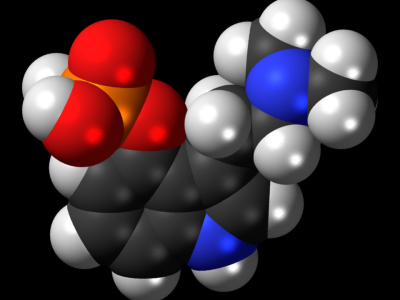
Psilocybin: what it is, how it works and what effects it has
Published :
2025-07-24 12:21:12
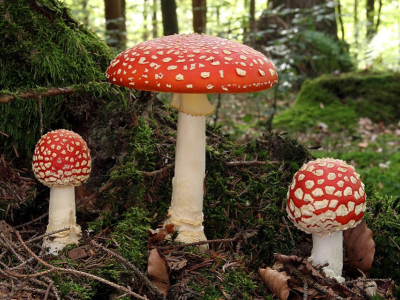
Complete guide to psychoactive mushrooms
Published :
2025-05-14 22:19:54
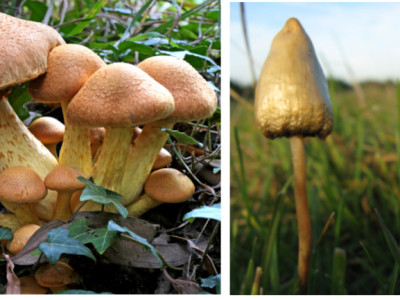
The evolutionary enigma of psilocybin
Published :
2025-12-29 12:04:40