










Fantasia Truffles - Mushmagic
Magic truffles
€16.99Price
To access our site, you must confirm that you are at least 18 years old.


It was 1966 and an engineer had been stuck for weeks. It wasn't a lack of knowledge or dedication: it was that most frustrating kind of block, the one that appears when you already know too much about a problem and that is precisely why you can't see it from the outside. He had tried everything he knew to try.
That afternoon he arrived at a building in San Francisco, lay down on a sofa with soft music playing in the background and took a controlled dose of mescaline with a small group of colleagues. Two hours later, with the effect still active, he got to work.
What that engineer didn't know was that he was participating in one of the most forgotten experiments in the history of psychology. It was led by a researcher named James Fadiman and had an unusual design for the time: the 27 participants — engineers, architects, mathematicians, designers — arrived with a real problem from their work, a specific one that had gone unsolved for months. The aim was not to observe what happened in the abstract under the effects of a psychedelic substance, but to see whether that substance could help them solve something specific. At the end of the sessions, the problems were evaluated by third parties. In 40 of the 44 problems assessed, there had been a real breakthrough: technical solutions, conceptual models, designs that hadn't existed before.
Some of those results ended up being patented. The study had no control group or placebo, so its conclusions were suggestive, not definitive. But the question it left open was too concrete to ignore: under exactly what conditions did this occur, and for what type of thinking?

Before getting into what psychedelics do, it's worth pausing for a moment on what we mean by creativity, because the word conceals two quite distinct mental processes that science has spent decades trying to separate.
The first is divergent thinking: the ability to start from a point and generate multiple ideas in different directions. It's what happens when someone brainstorms, when a musician improvises or when a designer explores ten possible solutions before settling on one. It's not looking for the right answer because it doesn't yet know what form that answer takes.
The second is convergent thinking: finding the single correct solution to a well-defined problem. It's what a mathematician needs to close a proof, an engineer to make something work, or an editor to choose which sentence reads best. Here there is a correct answer, and the goal is to reach it with precision.
In real life these two modes alternate constantly, but in the laboratory they can be measured separately, and that turns out to be useful because psychedelics don't affect them in the same way or at the same time. That turns an apparently simple question — do they make you more creative? — into something considerably more interesting.
In 1926, psychologist Graham Wallas described the creative process in four phases. The model is nearly a hundred years old and its limitations are well known, but it remains the most widely used reference framework in the field for a specific reason: anyone who has worked for weeks on a difficult problem recognises it from the inside.
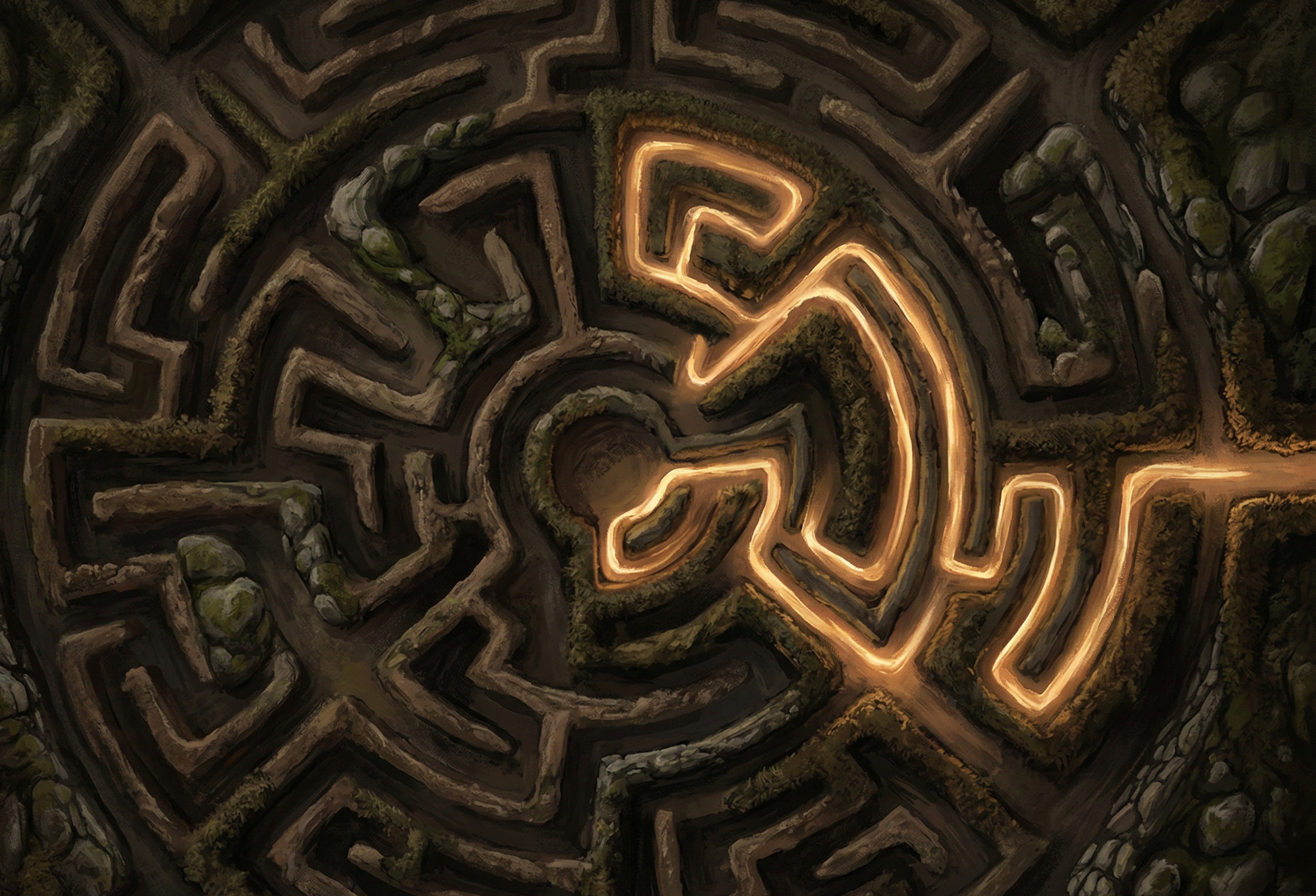
What research on psychedelics and creativity suggests is that these substances act preferentially in the illumination phase, not in the other three. They don't accelerate preparation or substitute for prior work. They don't replace subsequent verification. What they seem to facilitate is that specific moment when the brain connects elements that under ordinary conditions would remain separate, precisely because they relax the filtering mechanisms that habitually suppress less conventional associations. That is why Fadiman's experiment required participants to arrive with a problem already worked on for months: without prior preparation, there is nothing to illuminate.
The question most often repeated around this topic — do psychedelics make you more creative? — is poorly formulated. Not because the answer is no, but because creativity on its own is too vague for the question to have a useful answer. Research in recent years has been far more precise: what type of creative thinking, at what moment, and under what conditions.
A study published in Translational Psychiatry in 2021 examined the effects of psilocybin on creativity with a more rigorous design than previous work: double-blind, with placebo and neuroimaging. The results were nuanced. During the acute session, psilocybin increased spontaneous creative insights — those connections that appear without being sought — while reducing deliberate creativity oriented towards specific tasks. Seven days later, divergent thinking had improved compared to the placebo group. The pattern is consistent with Wallas's model: the substance does not improve conscious, directed work, but does seem to facilitate the illumination phase and leave a positive trace in idea generation during the following days.
A 2022 study on LSD published in the Journal of Psychopharmacology pointed in a similar direction. Under its effects, novelty and symbolic thinking increased, but practical utility and convergent thinking decreased. Greater capacity to generate unexpected connections, less capacity to evaluate which ones are actually useful. The two findings together paint a fairly clear picture: psychedelics open up the space of possibilities, but don't help navigate it with precision.
There is a finding in research on psychedelics and creativity that seems counter-intuitive at first glance: the most consistent benefits don't appear during the session, but in the days that follow. For someone who expects the substance to produce a state of brilliance in real time, this may seem like a limitation. Properly understood, it is the most interesting finding in the entire field.
During the acute session, as we saw, analytical thinking weakens. The ability to evaluate, filter and execute with precision diminishes. It is not the optimal moment to solve a complex technical problem or to make decisions requiring rigour. It is the moment when the brain explores, associates freely and accesses connections that under ordinary conditions would remain suppressed. The real consolidation work happens afterwards.
This has a neurobiological explanation that connects directly to what psilocybin does to the brain at a structural level. The session opens a window of greater neuronal plasticity that does not close when the substance leaves the organism. During the following days, the brain remains in a state of greater flexibility: the neural networks that reorganised during the experience remain more accessible, and less rigid thinking patterns tend to persist. It is during this period that studies record the most solid improvements in divergent thinking. If you want to explore the specific mechanisms of that plasticity in greater depth, we explain them in detail in our article on neuroplasticity and psilocybin.
The parallel with Wallas's model proves useful again here. The psychedelic session resembles less the phase of instantaneous illumination and more an accelerated and intensified incubation: the brain processes, reorganises and connects, and the results of that process emerge gradually in the following days. The participants in Fadiman's experiment who reported maintaining an elevated creative capacity for weeks after the experience were probably describing exactly this, even though in 1966 the tools to explain it in those terms did not yet exist.
If there is one topic within the psychedelic world where the gap between popular narrative and scientific evidence is greatest, it is microdosing. The idea of taking subperceptual doses of psilocybin periodically to improve focus, mood and creativity has spread enormously in recent years, especially in technological and creative environments. The testimonials are abundant and in many cases genuinely convincing. The problem is that testimonials are not controlled evidence.
The most relevant study for understanding this gap is that of Balázs Szigeti and his collaborators, published in 2021. Its design was particularly ingenious: since it is practically impossible to conduct a true blind trial with psychedelics — those who take the active dose usually identify it through subtle physiological changes — Szigeti developed a protocol in which the participants themselves prepared capsules without knowing which contained the active substance and which contained the placebo. It was an imperfect blind but considerably more robust than studies based on self-report with no control whatsoever. The result was that participants who believed they had taken the active dose reported improvements in creativity and wellbeing regardless of whether they had actually taken it. When expectation was controlled for, the specific effect of the substance was notably reduced.
That doesn't mean microdosing has no real effect. It means that a significant part of the effects reported on creativity is mediated by expectation, and that separating the two is methodologically very difficult. Research in this field is still in its early stages and existing studies are heterogeneous in design, dosage and population. Solid conclusions are scarce.
What does seem clear is that the profile of microdosing is different from that of therapeutic doses in a controlled session. To understand in detail how microdosing works, what protocols exist and what the available evidence says beyond creativity, we develop it in depth in our article on psilocybin microdoses.
Before any study on psychedelics and creativity existed, most people working in creative disciplines already knew first-hand something that psychology took decades to formalise: there are moments when work flows in a qualitatively different way. Concentration is total, conscious effort disappears, time distorts and ideas chain together without friction. Psychologist Mihaly Csikszentmihalyi called this the flow state, and since the 1990s it has been one of the most solid and replicated concepts in positive psychology.
Flow is not a metaphor or a mystical experience: it has measurable neurological correlates. It is associated with a reduction in activity in the prefrontal regions involved in self-monitoring and self-criticism, which frees up cognitive resources for creative processing. In other words: when you stop watching yourself while you work, you work better. The problem is that this state is notoriously difficult to provoke deliberately. It appears when it appears, and most strategies for forcing it have the opposite effect.

The connection with classical psychedelics is becoming increasingly plausible. The neurological profile of both states shares relevant elements: reduced activity in the default mode network, decreased self-monitoring, greater connectivity between brain regions that usually operate in a more segregated fashion. The hypothesis is that psilocybin could facilitate access to states functionally similar to flow, or at least reduce the inhibition mechanisms that prevent reaching them.
This is still a hypothesis under construction, not an established result. The Mind Flux project, an ongoing investigation led by doctors Manoj Doss and Greg Fonzo at the University of Texas, is systematically evaluating precisely this question: whether psilocybin improves the brain's ability to induce and sustain flow states, and what neural mechanisms mediate that relationship.
What began in 1966 with a group of engineers lying on sofas listening to relaxing music has evolved, nearly sixty years later, into one of the most uncomfortable and fascinating questions science can ask itself: to what extent is human creativity modulable?
The discomfort comes from several places at once. If the ability to generate original ideas, to see connections that others don't see, to solve problems that seem unsolvable depends in part on biological variables that can be pharmacologically altered, that forces a revision of some deeply held ideas about talent, inspiration and creative merit. It doesn't invalidate them, but it does complicate them.
It also forces practical questions that research cannot yet answer with precision. For what type of creative work would this kind of tool be useful, if one day it is administered in legal and supervised contexts? The answer is not the same for a composer in an exploratory phase as for an engineer seeking a technical solution, nor for the moment of incubation as for that of verification.
What science can say today is more modest but more honest than what circulates in the popular narrative: there is a real and measurable effect on specific aspects of creative thinking, that effect is neither uniform nor guaranteed, and the conditions under which it occurs matter as much as the substance itself. It is not a shortcut. It is not a source of ideas on demand — it is a catalyst for processes already underway. It is a window that, under certain conditions, seems to open a little wider than usual.
The underlying question that Fadiman posed in 1966 remains without a definitive answer. But the fact that research has returned to that question with far more precise tools, and that the results are consistent enough to sustain active lines of inquiry at the world's leading universities, says something about the solidity of the question. Good questions survive the eras in which they cannot be answered.
Harman, W. W., McKim, R. H., Mogar, R. E., Fadiman, J., & Stolaroff, M. J. (1966). Psychedelic agents in creative problem-solving: A pilot study. Psychological Reports, 19(1), 211–227.
Mason, N. L., et al. (2021). Spontaneous and deliberate creative cognition during and after psilocybin exposure. Translational Psychiatry, 11, 209.
Wießner, I., et al. (2022). LSD and creativity: Increased novelty and symbolic thinking, decreased utility and convergent thinking. Journal of Psychopharmacology, 36(3), 348–359.
Szigeti, B., et al. (2021). Self-blinding citizen science to explore psychedelic microdosing. eLife, 10, e62878.
Wallas, G. (1926). The Art of Thought. Harcourt Brace.
Csikszentmihalyi, M. (1990). Flow: The Psychology of Optimal Experience. Harper & Row.
Related posts

How psilocybin can reshape the adult brain
Published :
2026-03-20 12:46:23
The psychedelic influence of Silicon Valley
Published :
2025-09-24 20:29:22
What are psilocybin microdoses and how do they work
Published :
2025-11-17 11:53:06