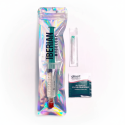







Fantasia Truffles - Mushmagic
Magic truffles
€16.99Price
To access our site, you must confirm that you are at least 18 years old.


Psilocybin is one of the psychoactive substances with the best known physiological safety profile: it does not produce significant organic toxicity at usual doses, does not generate physical dependence, and no deaths directly attributable to its toxicity have been documented. However, this does not mean it is a substance without risks. Its risks are real, specific and, in certain profiles, serious. Understanding them is not an exercise in alarmism but a basic condition for any responsible approach.
This guide covers the known clinical contraindications, documented pharmacological interactions, specific psychological risks and contextual variables that modulate safety.
There are clinical profiles for which psilocybin use is strictly inadvisable due to the risk of serious psychological decompensation. All modern clinical trials systematically exclude them, and that exclusion is not a bureaucratic technicality: it reflects real evidence of potential harm.
People in active psychological crisis, with suicidal ideation or in a serious depressive episode without clinical supervision have a formal contraindication to psilocybin use, despite the existing therapeutic evidence for depression. The positive clinical evidence comes from highly controlled protocols with rigorous participant selection and intensive support. Outside that context, elevated emotional vulnerability can amplify the difficult content of the experience in unpredictable ways.
People diagnosed with schizophrenia, schizoaffective disorder or any primary psychotic disorder represent the clearest and best-documented contraindication. Psilocybin acts on the same serotonergic and dopaminergic circuits that are altered in these disorders. Its administration can precipitate or prolong active psychotic episodes, even in people who have been stable on medication for years. The risk does not disappear with clinical remission.
There is documented risk that psychedelics may precipitate manic or hypomanic episodes in people with bipolar disorder type I. Acute activation of the serotonergic system can act as a trigger in individuals with this vulnerability, even when they are euthymic at the time of administration.
Bipolar disorder type II does not constitute an absolute contraindication, but nor can it be treated as a low-risk profile. The evidence is insufficient to establish a definitive criterion: some ongoing trials include it with reinforced monitoring protocols; others exclude it as a precaution. The practical recommendation is not to proceed without prior psychiatric evaluation and without clinical support during and after the experience.
Genetic predisposition to psychotic disorders — parents or siblings diagnosed with schizophrenia or bipolar disorder type I — is considered an exclusion factor in all current clinical trials. It should be noted that this criterion is not absolute in terms of individual risk: having a family member with psychosis does not determine that a person will develop it. However, in the absence of a supervised protocol capable of monitoring and responding to a crisis, caution is justified. In uncontrolled settings, this history must be taken seriously.
People with pre-existing difficulties integrating ordinary reality — dissociative identity disorder, chronic depersonalisation-derealisation disorder — may see their symptomatology significantly aggravated by psilocybin use. The psychedelic experience induces altered states of consciousness that, in individuals with these diagnoses, can be difficult to distinguish from their usual symptoms, which complicates both the acute experience and its subsequent integration.
A previous serious psychological reaction — intense panic attack, prolonged dissociative episode, autolytic ideation during or after an experience — is a relevant predictor of risk in future exposures. It does not in itself invalidate subsequent experiences, but does require careful evaluation of the circumstances that produced it and the context in which new use would be considered.
For guidance purposes, any reaction that required external intervention, generated ideation of self-harm, or produced dissociative or psychotic symptoms persisting beyond the hours immediately following the experience can be considered serious.
Psilocybin interacts directly with the serotonergic system, which means that its combination with certain medications can attenuate its effects, potentiate them dangerously, or generate serious systemic toxicity.
There are two qualitatively distinct risk categories. The first is serotonin syndrome, a potentially serious condition caused by excess synaptic serotonin, whose risk is especially relevant in combination with MAOIs. The second, and of greater documented severity, is the seizure risk associated with lithium: cases of generalised seizures and status epilepticus have been recorded even at low doses, with potentially fatal outcomes. These two categories are not comparable to each other and are detailed in the table below.
| Pharmacological group | Common examples | Effect of the interaction | Risk level |
|---|---|---|---|
| SSRI / SNRI antidepressants | Fluoxetine, Sertraline, Venlafaxine | Typically attenuate or nullify subjective effects through serotonergic cross-tolerance. Prolonged SSRI use can significantly reduce the response. | MODERATE |
| MAO inhibitors (MAOIs) | Phenelzine, Tranylcypromine; also harmine (ayahuasca) | Inhibit the metabolism of psilocin, potentiating its effects intensely and unpredictably. Primary risk of serotonin syndrome due to accumulation of synaptic serotonin. | HIGH RISK |
| Antipsychotics | Quetiapine, Risperidone, Haloperidol | Act as 5-HT2A receptor antagonists, blocking or attenuating the experience. In some cases they are used as "trip aborts" in emergencies. Regular use is incompatible with therapeutic effects. | MODERATE |
| Lithium | Lithium carbonate | Extremely dangerous. Numerous cases of generalised seizures and status epilepticus have been documented even at low doses. This interaction can be fatal and represents the most serious pharmacological risk documented. | CRITICAL |
| St John's Wort | Hypericum perforatum (natural supplement) | By acting on serotonin reuptake, it may attenuate effects through receptor competition or, theoretically, raise the risk of serotonergic excess. | CAUTION |
| Triptans | Sumatriptan, Rizatriptan (migraine) | Act on serotonergic receptors. The mechanistic overlap suggests caution. Some users report that they can reduce the experience; the risk of adverse interaction has not been ruled out. | CAUTION |
| Cannabis | THC (especially at high doses) | Increases the risk of intense anxiety reactions, dissociative states and panic episodes. The synergy can amplify negative effects disproportionately, especially with pre-existing vulnerability. | HIGH RISK |
| MDMA | 3,4-methylenedioxymethamphetamine (ecstasy) | Releases serotonin massively in addition to dopamine and noradrenaline. The serotonergic overlap with psilocybin raises the risk of serotonin syndrome more directly than other stimulants. The combination can produce extreme emotional intensification that is difficult to manage. | HIGH RISK |
| Dopaminergic stimulants | Amphetamine, methamphetamine, cocaine | Act primarily on the dopaminergic and noradrenergic systems. The primary risk is physiological: significant increase in heart rate and blood pressure, with potential for unpredictable intensification of the experience. A different risk mechanism from that of MDMA, not specifically serotonergic. | HIGH RISK |
| Alcohol | Ethanol | A central nervous system depressant, with a mechanism opposite to that of stimulants. Increases nausea, disorientation and unpredictability of the experience. Interferes with the capacity to integrate and manage emerging content. Does not produce the same cardiovascular risk profile as stimulants, but combined use is clearly inadvisable. | INADVISABLE |
* Recreational substances frequently combined with psilocybin are also included due to their practical clinical relevance.
On SSRI withdrawal: Some people taking antidepressants discontinue their medication before a psilocybin experience to restore serotonergic sensitivity. This practice carries its own risks — discontinuation syndrome, depressive rebound — which can be more dangerous than the attenuation of the psychedelic effect. Withdrawal from any psychotropic medication must always be done under medical supervision.
It is essential to distinguish between a medical risk and the expected side effects of psilocybin. The latter typically appear during the onset phase and remit completely at the end of the experience. Their presence does not indicate organic toxicity, but rather the natural response of the autonomic nervous system to the substance:
Although the organic toxicity of psilocybin is minimal compared to other psychoactive substances, the psychedelic experience produces an activation of the autonomic nervous system that includes a slight increase in heart rate and blood pressure, as well as other physiological effects that require caution in certain conditions.
Severe uncontrolled arterial hypertension and a history of recent cardiovascular events — myocardial infarction, stroke — represent relevant risk factors. The transient increase in heart rate and blood pressure produced by psilocybin is generally moderate in healthy individuals, but can be clinically significant in those with pre-existing cardiovascular compromise. Active cardiac arrhythmias or known structural cardiac defects also warrant caution.
Frequent and prolonged use (as in microdosing) raises a theoretical risk of damage to the heart valves. This is due to psilocin's affinity for the 5-HT2B receptor; its chronic activation has been associated, with other 5-HT₂B agonists such as fenfluramine or ergot alkaloids, with cardiac valvular fibrosis. Direct extrapolation to psilocybin does not yet have its own epidemiological studies, but the receptor mechanism is sufficiently analogous to justify caution.
No human safety studies exist for either of these conditions. As a precautionary principle, psilocybin use is entirely inadvisable during pregnancy and breastfeeding. The acute serotonergic activation and possible effects on foetal neurological development make the benefit-risk ratio unfavourable under any circumstance, regardless of the reason for use.
Psilocybin is primarily metabolised in the liver by alkaline phosphatases that convert it into psilocin, the active compound. In patients with severe hepatic insufficiency, this process can be altered unpredictably. Although specific data in this population are practically non-existent, the absence of information is in itself a reason to advise against its use outside of controlled clinical settings.
There is well-founded theoretical caution regarding psilocybin use in people with epilepsy or a history of seizures, especially in combination with lithium (see interactions table). Direct evidence is limited, but the intense serotonergic activation and changes in cortical excitability produced by psilocybin justify prudence in this profile.
There is also preliminary research on the use of psilocybin in refractory focal epilepsy, but these are highly controlled experimental settings that do not change the recommendation of caution for general use.
Even in people without known medical contraindications, psilocybin can produce adverse psychological effects during the acute experience or in the period that follows. Understanding them is important both for those considering its use and for those supporting therapeutic processes.
HPPD is characterised by the spontaneous reappearance, weeks or months after the substance has left the body, of visual distortions similar to those experienced during the acute experience: halos around lights, "visual snow", persistent motion trails, distortions at the edges of objects. In some cases these perceptions are mild and transient; in others, they can be persistent, intrusive and distressing.
Its exact prevalence is not well established, partly due to underreporting, but it has been documented both after single uses and after repeated use. There is no standard pharmacological treatment and in some cases it can become chronic without spontaneous remission.
From the perspective of neuroplasticity, HPPD is conceptually relevant because it illustrates that brain changes induced by psilocybin are not inherently adaptive: in some individuals, modifications in visual and attentional processing circuits can consolidate in unwanted ways. It is the clearest example that "more plasticity" does not automatically equate to "better".
In the field of psychedelic research, the term difficult experience or challenging experience is used to refer to episodes of intense anxiety, confusion, fear or existential anguish that can arise during the acute phase. Colloquially known as a "bad trip", an imprecise term that nonetheless describes a real phenomenon.
It is important to distinguish this phenomenon from psychological harm: a difficult experience is not necessarily traumatic or harmful. In well-prepared contexts with adequate support, the difficult content of a psychedelic experience can have therapeutic value. The problem arises when the crisis occurs without support, in an inadequate environment, or in people with unidentified pre-existing psychological vulnerability. In these cases, the experience can lead to psychological trauma, panic episodes of variable duration or, in exceptional cases, risk behaviours during the acute phase.
The duration of the experience — between four and six hours for therapeutic doses — is itself a risk factor in the absence of support: unlike other shorter-acting substances, there is no simple way to "exit" an intense psychedelic experience once it has begun.
Psilocybin has a documented capacity to facilitate access to deep emotional memories and to significant autobiographical content. In therapeutic settings, this is precisely one of its most valued mechanisms of action. In unsupervised settings, the reactivation of unprocessed traumatic material — abuse, bereavement, dissociative episodes — can be overwhelming and difficult to manage without professional support. In these cases, having a therapist or professional familiar with psychedelic integration before the experience, not only afterwards, significantly reduces the risk.
The period following an intense psychedelic experience can include confusion about the meaning of what was experienced, changes in perspective that are difficult to articulate, or a feeling of disconnection from the everyday environment. Without an adequate integration process, these states can be prolonged or misinterpreted, generating unnecessary distress or, at the opposite extreme, an excessive attribution of significance to the experience that interferes with everyday functioning.
One of the most consistent findings in psychedelic research is that the safety and outcome of the experience depend not only on the biology of the substance, but very significantly on the context in which it occurs. This principle is usually articulated around four interdependent variables.
The psychological disposition prior to the experience: intention, expectations, emotional stability at the time, absence of acute crisis. An unstable mental state or one of high unresolved emotional charge increases the likelihood of a difficult experience. Deliberate preparation — clarifying intention, addressing prior fears — is a recognised protective factor.
The place where the experience occurs: privacy, physical safety, absence of interruptions, sensory comfort, support materials (music, blankets, somewhere to lie down). An unpredictable, noisy or potentially dangerous environment can amplify anxiety and hinder navigation through difficult content.
The presence of a trusted person — ideally with experience in psychedelic support — who does not consume the substance and whose role is to ensure physical safety, offer a calming presence, and facilitate navigation through difficult moments without intervening unnecessarily. The sitter figure is as important as any pharmacological variable.
The subsequent process must make sense of the experience: personal reflection, conversation with trusted people or with a professional, changes in habits or perspective arising from what was experienced. Without integration, even a positive experience can lose its transformative potential, and a difficult one can remain inadequately processed.
The absence of any of these four variables does not make the experience inevitably harmful, but it does significantly increase the risk of adverse outcomes. In clinical trials with the best therapeutic results, all four elements are systematically present and carefully designed.
Beyond formal contraindications, there are profiles that, without having an absolute contraindication, present greater vulnerability and require specific consideration.
Under 25 years of age. The human brain completes its development around the age of 25, with the prefrontal cortex — involved in emotional regulation, decision-making and impulse control — being the last region to mature. Psilocybin use during this developmental period may have neurobiological implications that are not sufficiently characterised. In addition to prefrontal cortex maturation, this age range coincides with the epidemiological vulnerability window for the onset of psychotic disorders. The use of intensely serotonergic substances during this period can act as a trigger for latent conditions that might otherwise not have manifested, or might have done so later.
People with high anxiety sensitivity. The tendency to interpret physical and mental sensations catastrophically — high anxiety sensitivity — is a relevant predictor of difficult experiences with psilocybin. It is not an absolute contraindication, but it is a factor that demands greater preparation and support.
People in recent bereavement or acute life crisis. Psilocybin can amplify emotional processing intensely. In controlled therapeutic settings, this has value; in unsupervised settings, an active life crisis can become the focus of an experience that proves overwhelming without adequate support to navigate it.
Although this guide focuses on biological and psychological risks, it is imperative to understand that the legal status of psilocybin introduces additional health hazards: lack of purity control, imprecision in dosing and barriers to medical assistance. For detailed information on the current regulations, see our Psilocybin Legal Map
Editorial disclaimer: This guide has been prepared for exclusively informational and educational purposes on the basis of scientific evidence. It does not constitute medical, psychological or legal advice.
References last reviewed in March 2026.
Related products
Related posts
Therapeutic applications of psilocybin
Published :
2025-07-31 14:25:24
Psilocybin: what it is, how it works and what effects it has
Published :
2025-07-24 12:21:12

Myths about psilocybin that science has debunked
Published :
2025-12-10 20:34:04