








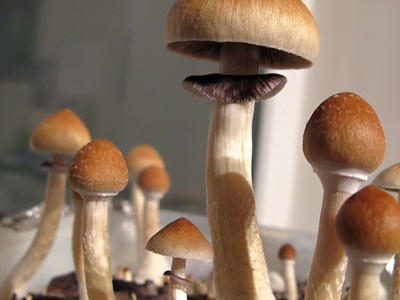
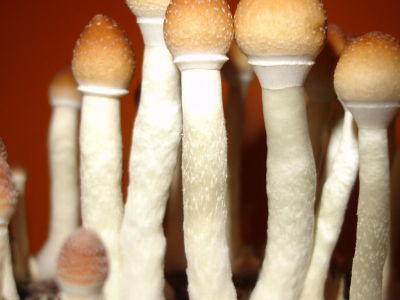

Fantasia Truffles - Mushmagic
Magic truffles
€16.99Price
To access our site, you must confirm that you are at least 18 years old.


Article based on the central reflection of the lecture "Decolonizing Psychedelic Science," given by Dr. Pierangela Contini at the Microdosing & Transformation Conference 2025.
Every trip has two halves: the visible one and the one that sustains the mystery. The history of psychedelics is no different.
In recent decades, the so-called psychedelic renaissance has returned previously forbidden topics to public conversation: psilocybin therapies, microdosing, clinical trials, startups promising to "cure the mind." But while headlines celebrate scientific advances, many of the voices that made them possible remain silent.
Women have played crucial roles, often invisibilized, in the care, accompaniment, translation, and preservation of psychedelic knowledge. Their contribution has frequently been omitted from the records of "discoveries," a pattern that aligns with a form of extractivism that transforms living experience into data, rituals into protocols, and ancestral plants into patentable molecules.
Naming them is not just a matter of historical justice. It is a necessary step to decolonize consciousness and recognize that knowledge, too, can be a form of power.
It is a subtle form of dominion where a knowledge system (generally the Western/scientific one) appropriates, translates, and decontextualizes knowledge, practices, and experiences generated by other cultures (e.g., indigenous peoples, women, marginalized communities). Knowledge is extracted, reinterpreted, validated only through the Western lens, and often commodified, without offering reciprocity or recognition to its original sources.
The historical narrative on psychedelic science has been dominated, almost since its inception, by male voices. Albert Hofmann, Gordon Wasson, Terence McKenna, Aldous Huxley, Timothy Leary, Alexander Shulgin… all men, all celebrated as pioneers of a mental revolution that, nevertheless, inherited the biases of colonialism and patriarchy.
For centuries, knowledge associated with the feminine—such as the practices of herbalists, healers, and medicine women—has been persecuted. This erasure has a documented historical precedent in the brutal persecution of the "witch hunts" in early modern Europe, which was not only an act of fanaticism but the systematic destruction of the female canon of knowledge about plants and medicine. This control over bodies and substances refers to the concept of coloniality, which imposes a single view of the world as universal and determines which knowledge is legitimate and which is excluded.
This perspective invites us to recognize that coloniality is not just something imposed on other continents, but a process that also occurred within the West's own borders. Before colonizing the Americas, the hegemonic system colonized its own past: the persecution of "witches" was the foundational act that also stripped women of the Global North of their ancestral knowledge, cutting our own spiritual link with the earth and converting medicine into an exclusive terrain of male power.
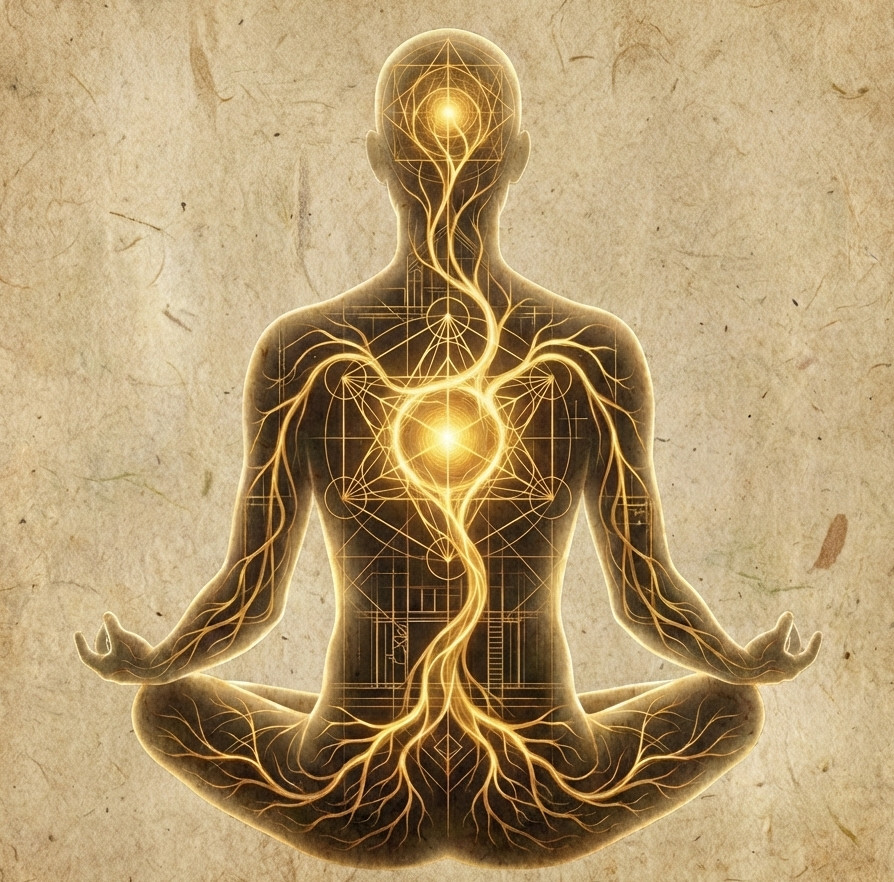
Psychedelic women embody that resistance: the body as an archive, the word as medicine, and care as a form of knowledge.
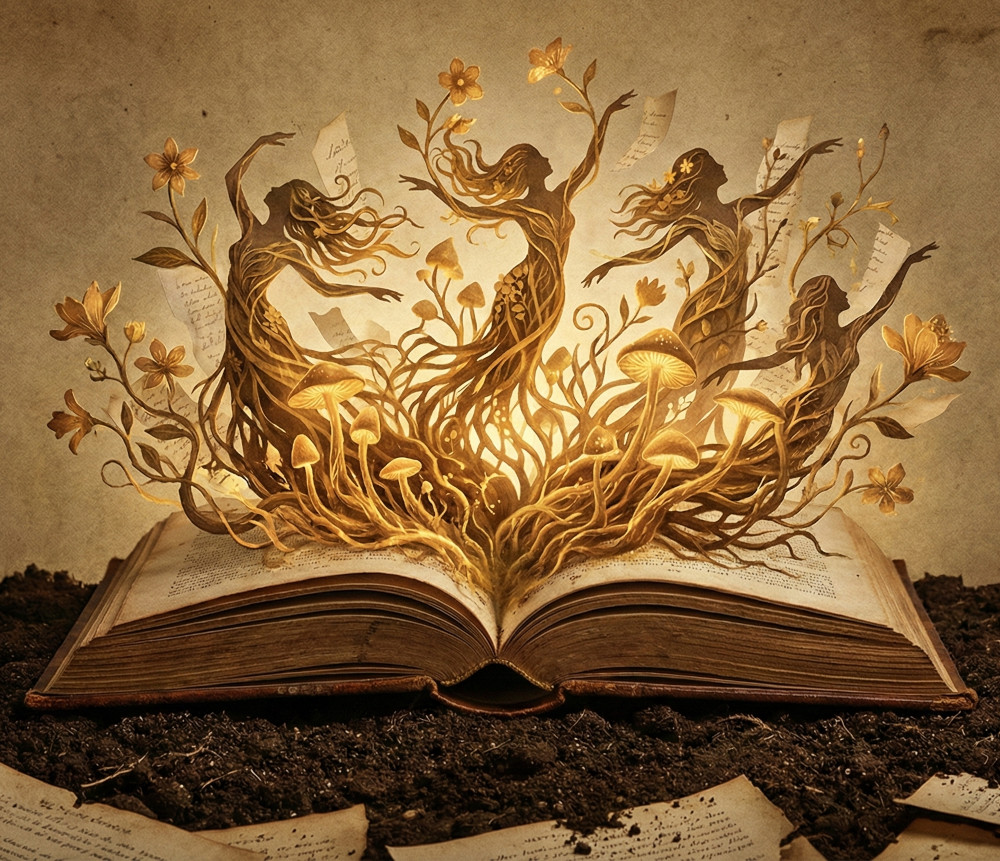
The male canon imposed a single lens, but psychedelic women kept the invisible depth: they were living memory of a wisdom that history wanted to silence. The pioneers we name below are not just forgotten names, but the incarnation of that ethic that sustained an honest and complex history where science, body, and spirit can dialogue as equals.
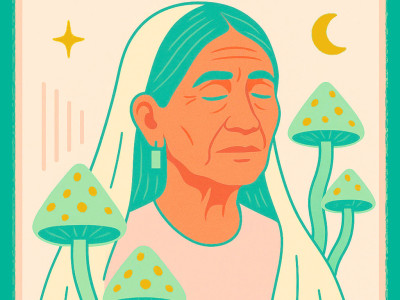
In 1955, María Sabina, a Mazatec healer from Huautla de Jiménez, offered a velada with the "holy children" to visitors Valentina and Gordon Wasson. That night marked the beginning of the encounter between two worlds: indigenous knowledge and Western curiosity. For the West, it was the "discovery" of psilocybin. For her community, the beginning of a wound.
After the Wassons' visit, María Sabina's knowledge was extracted, commercialized, and reinterpreted, often without the ritual context. For her community, this act represented the start of a colonial violence and the rupture of their social fabric. The dissemination of her story resulted in an invasion of her territory by tourists and curiosity seekers, and she ended up being ostracized by her own people for "revealing the sacred secret." Her legacy is a powerful testimony to the need for reciprocity and epistemic reparation, and a frontal denunciation of the devastating consequences of cultural extractivism and the appropriation of ancestral knowledge without due recognition.
A Russian pediatrician passionate about mycology, Valentina Wasson was the true driving force behind the search for the sacred mushrooms. It was she—and not her husband—who took the initiative to write to missionaries in Mexico to locate them. Far from being a mere companion, she documented her own experience in the article "I Ate the Sacred Mushroom", published in parallel to her husband's famous chronicle.
Her intuition led her to coin the concepts of "mycophilia" and "mycophobia," suggesting that Western fear of mushrooms actually reflected a fear of the irrational, the feminine, and the mystery of nature. Although she was the lead author of the seminal book Mushrooms, Russia, and History, after her death her contribution was eclipsed by the figure of Gordon Wasson. Thanks to the efforts of current researchers, her place as the founding mother of Western psychedelic mycology is being recovered today.
Ann Shulgin (1931–2022) lived at the heart of psychedelic alchemy. Alongside her husband, Alexander "Sasha" Shulgin, she explored the therapeutic possibilities of MDMA and other phenethylamines, at a time when prohibitionism pushed these practices underground.
But her contribution was not chemical, but symbolic: Ann created a deeply feminine language to describe inner journeys. She spoke of birth, shadow, surrender. For her, the 'trip' was a process of transformation, stating that "every trip is a birth" and that real healing comes from "the encounter with the Shadow." Her work (especially PiHKAL, written with Sasha) provided a symbolic language centered on the body and transformation, and was fundamental to introducing the conversation on the integration of the psychedelic process, transcending the mere substance.
Violinist, psychologist, and writer, Laura Archera Huxley defied the destiny of being "the wife of." After marrying Aldous Huxley, she became his partner in experimentation and, in a gesture of love and awareness, administered LSD to him in 1963 to accompany him "sweetly into death."
Laura defended an ethical and humanistic psychedelia, oriented towards inner growth and emotional responsibility. In her book You Are Not the Target, she proposed a model of self-therapy that combined science and spirituality, body and mind. Her figure is key for having proposed a psychological and relational approach in Western psychedelic reflection, being one of the first female voices to do so.
Born in the Bronx, Marlene Dobkin de Ríos was one of the first anthropologists to systematically study the traditional use of ayahuasca among the Shipibo and mestizos of Peru. In her pioneering work Visionary Vine (1972), she analyzed ayahuasca not as a "drug," but as a social, therapeutic, and knowledge instrument, inseparable from its cultural context.
Later, she analyzed substance use in poor neighborhoods in the United States. She applied her analysis of the Amazon to the West, understanding that dysfunctional substance use in contexts of poverty was a response to "structural inequality" and not an individual pathology. Her stance was that the substance was not the problem, but the social context that generated that behavior. Her work shifted the focus from the ritual to the analysis of social injustice.
Artist, traveler, and inventor, Mila Jansen (1944) changed cannabis culture forever. After living in India learning to craft charas by hand, she returned to Amsterdam. She founded the Pollinator Company and invented the Pollinator, a revolutionary machine that allowed for the separation of cannabis trichomes using a dry mechanical method.
By democratizing access to artisanal hashish, she became a feminist activist and pioneer who defended the use of cannabis as a tool for freedom and creativity. In a world dominated by men, Mila introduced humor, intuition, and craft. Her life is also a manifesto on the right to explore without asking for permission.
Poet and expert in mythology, Mary Barnard (1909–2001) coined the term "theobotany" in the 60s, defining it as the study of sacred plants as vehicles for a spiritual experience.
In her essay The God in the Flowerpot, she connected mythology, art, and neurochemistry long before psychedelic science was reborn. Her vision proposed a form of poetic knowledge: the word as a bridge between the visible and the invisible. Her 1963 prophecy about how "theobotanists" would transform theories on the origins of mythology has not been disproven.
Language is a frontier, but it can also be a portal. For centuries, it has served to hierarchize knowledge: the rational over the intuitive, the scientific over the spiritual, the male over the female.
In the psychedelic realm, the words we use are not neutral. The word "psychedelic," coined by Humphry Osmond in 1956, derives from the Greek psykhé and dêlos to mean "mind-manifesting." This term, born in the Anglo-Saxon world, already reflects an individual and psychic perspective of the experience.
As a reaction to this view, in 1979, scholars like Gordon Wasson and Jonathan Ott coined the term "entheogen," which means "generating the divine within" and was conceived to recover the sacred, ceremonial, and communal dimension that the West had ignored. Choosing between one and the other is a political act.
Therefore, new voices—many of them female and decolonial—are reinventing language to recover the body, care, and the sense of community. Adopting a more conscious vocabulary—such as speaking of "learning" instead of "bad trip," or questioning terms like "health," "cure," or "psychosis"—is an act of interrogating words to use them as tools of liberation.
A paradigmatic example of this tension is the concept of a "bad trip." While clinical medicine classifies it as an "adverse effect" or a treatment failure that must be avoided or suppressed, in ritual and traditional contexts, this difficult experience is usually understood as a purge, a confrontation with the shadow, or a necessary teaching. What science pathologizes as an error to control, ancestral wisdom integrates as a vital part of the process: pain is not always a symptom to eliminate, but sometimes a door to walk through.
"Naming is returning meaning; caring is decolonizing knowledge."
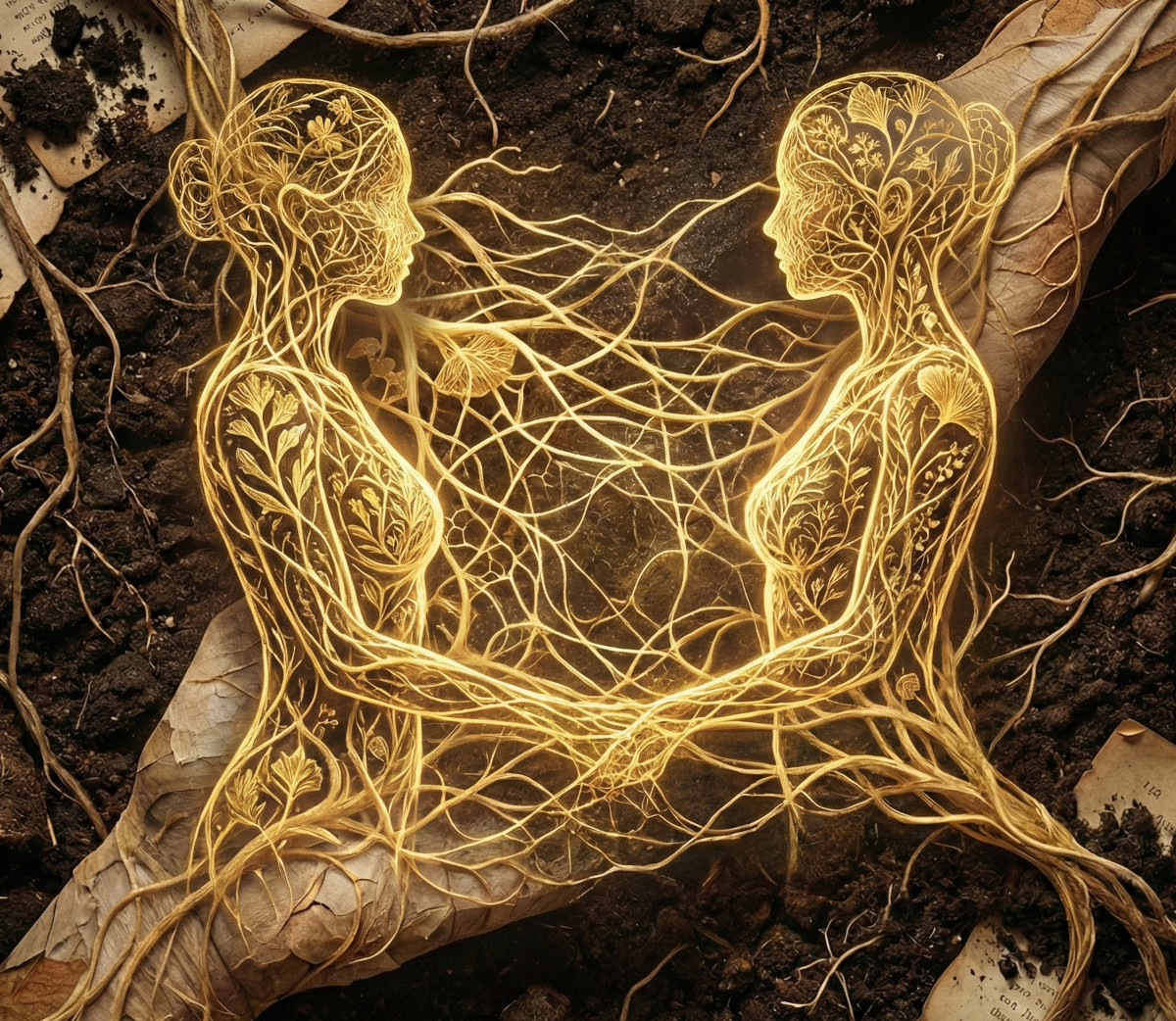
Facing this extractive logic—which takes, classifies, and appropriates without returning anything—feminists Carol Gilligan and Joan Tronto proposed another framework: the ethics of care.
This approach holds that morality is not based solely on individual autonomy or universal rules, but on interdependence, empathy, and responsibility toward the needs of others.
In the psychedelic realm, thinking from the ethics of care implies shifting the gaze from the experiment to the relationship; from the isolated datum to the body and community; from extraction to reciprocity.
By way of contrast, these principles illustrate that paradigm shift:
Relational Responsibility
Understanding healing as a bonding process—with oneself, with the community, with the Earth—and not just as a neurochemical phenomenon.
Contrast: breaks with the reductionist view of the "trip" as data or molecule.
Attention and Reciprocity
Listening to marginalized voices, recognizing indigenous knowledge, and ensuring that benefits return to their communities.
Contrast: denounces the cultural appropriation of figures like María Sabina or Amazonian traditions.
Caring Competence
Attending to the set, the setting, and emotional integration, just as Ann Shulgin defended.
Contrast: opposes the logic of "administering substance = cure."
Health as a Bond, Not Performance
Challenging the vision of mental health understood as mere productive functionality to embrace well-being as the capacity to "breathe differently," to be present, and to sustain affections.
Contrast: questions the capitalist model that values healing only if it allows a return to work, ignoring the existential dimension.
This is not a theoretical abstraction, but a practical urgency: it translates into how clinical trials are designed today, who decides integration protocols, and the creation of less hierarchical clinical spaces.
As Tronto points out, "caring is attending to life in all its dimensions."
The ethics of care thus offers a framework to move from medicine as dominion over the symptom to medicine as the art of sustaining the bond.
Recovering these voices not only corrects a historical omission; it redefines what we understand by knowledge. In the psychedelic journey, the ethics of care is not the shore of the method, but its true root. The women who sustained psychedelics expanded the possible and reminded us that knowledge is not measured only in results, but in relationships: with the body, with the earth, with others.
Today, collectives such as the Chacruna Institute, ICEERS, or Women on Psychedelics continue that legacy, reclaiming reciprocity, diversity, and justice in psychedelic research. The new psychedelic science will be truly revolutionary when it stops looking from above and starts listening from within. When it understands that healing is not dominating, but linking.
To make this revolution just, daily practice needs to be based on decoloniality and the ethics of care. This requires:
In this sense, Contini echoes the words of Ann Shulgin: "Every trip is a birth." This metaphor reminds us that the new psychedelic science cannot be just a technical advance, but a collective birth: a slow, fragile, and deep process seeking a fairer knowledge.
Because the true revolution is not in the molecule, but in the bond. It is about returning to the body, to the community, and to care so that history is complete. The other half of the trip is no longer invisible; it was just waiting for us to learn to listen to it.
This article is an editorial elaboration and critical analysis based on the key ideas presented by Dr. Pierangela Contini in her lecture "Decolonizing Psychedelic Science: Reflections from the Global North," during the Microdosing & Transformation Conference 2025.
In her intervention, Contini addressed how the history of psychedelics reproduces forms of epistemic extractivism: the appropriation of knowledge and experiences without recognizing their origin. From her anthropological perspective, the author invites us to review who has had a voice in this field and who has been silenced. The content of this article delves into these reflections, the fruit of her research and activism regarding cognitive justice.
Mushverse sincerely thanks her for her valuable collaboration and the depth of the reflections shared in her talk.
Related posts
María Sabina: the Mazatec healer who spoke with mushrooms
Published :
2025-04-13 09:10:14

Practical guide to psychedelic support and harm reduction
Published :
2025-11-06 10:33:53
Myths about psilocybin that science has debunked
Published :
2025-12-10 20:34:04