







Fantasia Truffles - Mushmagic
Magic truffles
€16.99Price
To access our site, you must confirm that you are at least 18 years old.


Although both structures are born from the same mycelium and share the same active substance (psilocybin), so-called magic truffles (sclerotia) and psilocybin mushrooms have profound differences. Not only do they differ in their biological function—the sclerotium is an underground energy reserve—but also in their density, which directly impacts dosage: truffles contain significantly less water than fresh mushrooms.
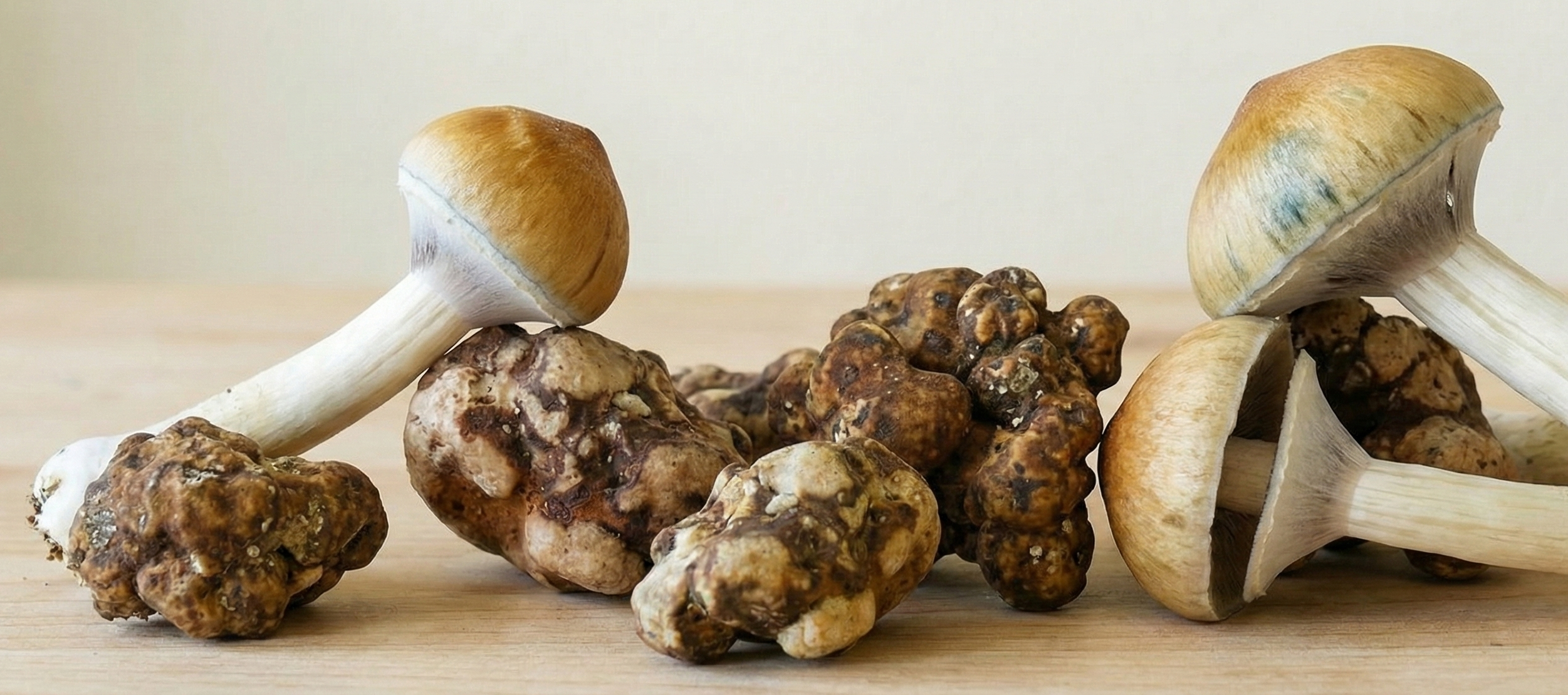
This morphological distinction has generated a fascinating legal loophole, turning magic truffles into the center of European interest in natural psychedelics, especially in the Netherlands, where they are sold legally.
However, confusion persists: what exactly are magic truffles? How do they differ from psilocybin mushrooms in terms of potency? And why is this biological distinction the key to understanding their unique legal status?
The term "magic truffle" is often used loosely. Many confuse it with gastronomic truffles of the Tuber genus, known for their aroma and culinary value. In reality, magic truffles are specialized underground structures called sclerotia (or sclerotia).
These are a compact, hard mass of dormant mycelium, rich in nutrients, which certain fungi of the Psilocybe genus (the same ones that produce mushrooms) generate to survive adverse environmental conditions like drought or cold. While the mushroom (or fruiting body) is the aerial organ dedicated to reproduction and spore dispersal, the sclerotium is exclusively a survival structure and energy reserve.
Their popularity grew following the ban on psilocybin mushrooms in the Netherlands in 2008, at which point psychedelic truffle cultivation emerged as an alternative.
The story of the 'magic truffle' as a legal product begins in the Netherlands. In 2008, the Dutch government banned psilocybin mushrooms following their growing popularity with tourists. However, the law, which amended the Opiumwet (Opium Act), focused exclusively on visible "fruiting bodies" (mushrooms), without explicitly including the sclerotium in its definition of the ban.
This created a legal scenario that allowed for the regulated cultivation and sale of magic truffles. This industry is active today, overseen by health authorities, and is the prime example of how biological morphology directly influences legislation.
First, a crucial clarification: gastronomic truffles of haute cuisine belong to the Tuber genus. They are mycorrhizal fungi that grow associated with tree roots and do not contain psilocybin, so their only relationship with 'magic truffles' is the popular name and their underground development.
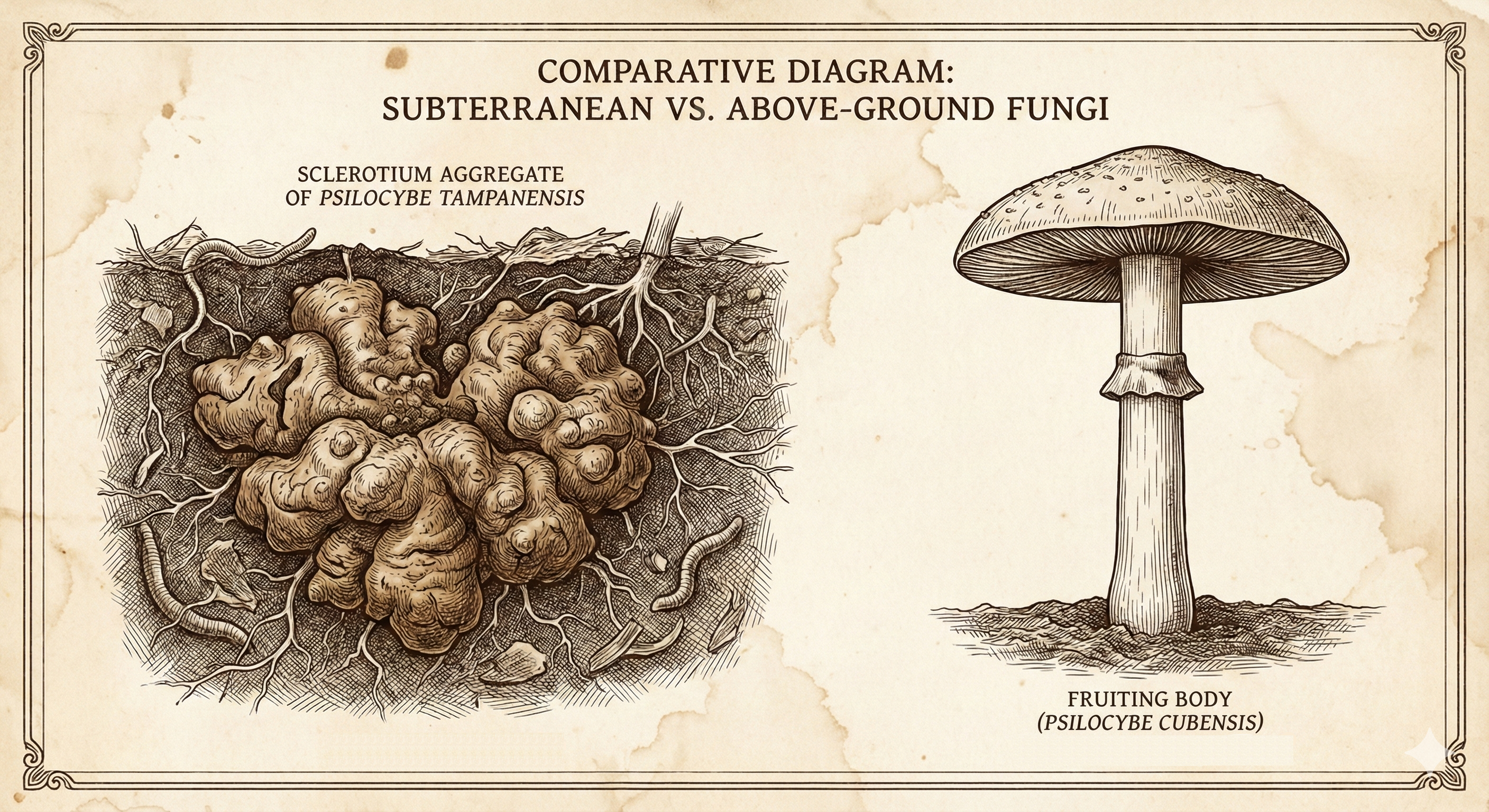
The essential biological difference between the magic truffle (sclerotium) and the mushroom lies in their evolutionary function. The sclerotium is the mycelium's survival strategy, an "energy bank" that allows it to withstand unfavorable conditions. In contrast, the mushroom is the reproductive phase that emerges from the substrate to disperse spores and perpetuate the species.
Only certain species of Psilocybe have the genetic capacity to produce these reserve structures, notably Psilocybe mexicana, P. tampanensis, or P. atlantis. In nature, the sclerotium can remain dormant for long periods until environmental conditions are suitable for producing the fruiting body.
| Element | Function | Location |
|---|---|---|
|
Sclerotium (Magic truffle) |
Nutritional reserve and survival mechanism |
Underground |
|
Fruiting body (Mushroom) |
Reproductive organ (production and dispersal of spores) |
Aerial |
Both structures share the fundamental chemical similarity: they contain psilocybin and psilocin, the compounds responsible for psychedelic effects. However, their concentration and distribution vary. Although factors such as substrate, temperature, or maturation time influence both cases, it has been observed that sclerotia tend to show a more stable and often slightly lower alkaloid concentration than that found in a mature fruiting body. This explains the perceived differences in "potency" at the time of dosage.
Legal warning: This content is strictly for informational, educational, and mycological dissemination purposes. In Spain and most European countries, psilocybin and the organisms containing it (mushrooms and sclerotia) are classified as controlled substances, and their consumption is illegal.
To understand the potency of magic truffles compared to mushrooms, it is essential to understand their physical composition. The usual confusion comes from comparing both structures in their fresh state.
Psilocybin mushrooms (fruiting bodies) are structures designed to grow fast and disperse spores, so they retain a huge amount of liquid: approximately 90% of their weight is water. In contrast, magic truffles (sclerotia) are compact, hard energy reserves with a much lower water content, ranging between 60% and 70%.
Although gram for gram dry, a mushroom may have an alkaloid concentration equal to or higher than a truffle, when fresh, the situation is reversed due to density.
If you weigh 10 grams of fresh mushrooms and 10 grams of fresh truffles, in the truffles you will be consuming much more real "fungal matter" and less water. For this reason, doses of fresh truffles seem more potent than those of equivalent fresh mushrooms.
| Structure (10g Fresh) | Water approx. | Real Dry Matter | Effective concentration |
| Psilocybin Mushroom | ~90% (9ml) | ~1g | Lower per fresh gram |
| Magic Truffle | ~65% (6.5ml) | ~3.5g | Higher per fresh gram |
In addition to density, sclerotia offer an advantage in terms of predictability. While mushroom potency can vary hugely between the first and last flush of cultivation (or even between two mushrooms from the same kit), magic truffles tend to be chemically more stable and homogeneous.
This consistency, added to their ease of being weighed accurately without dehydrating quickly, has made them the preferred option for users seeking accuracy, such as in microdosing protocols.
Finally, not all truffles are equal. There are notable differences depending on genetics:
It is vital not to be guided only by marketing, but to know the botanical species behind the product to understand its real alkaloid profile.
Psychedelic trufficulture is a specialized branch of applied mycology focusing on the controlled cultivation of sclerotia. It is important to note that the term trufficulture, although originally referring to the cultivation of Tuber (gastronomic truffles), has been adapted and popularized as a neologism for this specific practice.
In sterile culture environments, mycelium develops in nutrient-rich substrates. To induce sclerotium formation, growers replicate in a controlled manner the environmental stress conditions the fungus would face in nature.
This is often achieved through gradual moisture restriction (water stress) or partial nutrient depletion. This key factor "tricks" the fungus, forcing it to activate its biological survival mechanism and compact nutrient reserves underground to form the truffle. The process requires precise control of temperature and sterility and generally takes several months.
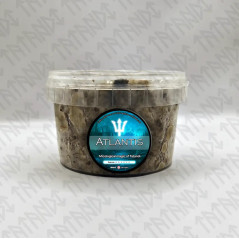
The commercialization of magic truffle kits in the Netherlands has driven the spread of this practice from an educational and cultural approach. These kits usually contain selected strains like P. mexicana, Atlantis, or Tampanensis, which form structures ready for harvesting and study after 8–12 weeks. The ease of harvesting, without needing to wait for the aerial development of the fruiting body, is one of its commercial advantages.
Beyond the market, trufficulture is today linked to scientific research on psilocybin, fungal biotechnology processes, and responsible dissemination. Some projects even explore its ecological potential and low environmental impact, consolidating it as a key platform for the study of natural psychedelics.
Knowing how to differentiate between truffles and psilocybin mushrooms avoids interpretation errors and reduces legal risks. Most people are unaware that both products come from the same organism, but that their morphology determines their legal status in certain regions.
Understanding the complete life cycle of the fungus—from underground mycelium to sclerotium and from there to the fruiting body—helps to appreciate the complexity of the fungi kingdom, its amazing evolutionary adaptability, and the different survival strategies it employs.
Fostering a conscious and documented mycological culture is essential. It allows approaching these organisms with scientific rigor, curiosity, and respect, avoiding myth, misinformation, and improvisation.
Magic truffles, in summary, are not a distinct species, but the survival phase of the same organism that produces mushrooms. Distinguishing between both structures is vital to understand not only their biology—especially the difference in density due to water content—but also to clearly navigate the legal and cultural nuances surrounding them.
The existence of a regulated market for sclerotia in Europe is a fascinating testament to how a biological omission in the letter of the law can redefine an entire industry. Exploring the mycelium is, in this context, exploring our relationship with nature, legislation, and knowledge, opening the door to future research. Well-informed curiosity is, without a doubt, the best compass on this journey.
Related posts
The life cycle of fungi
Published :
2025-04-29 14:38:10
The evolutionary enigma of psilocybin
Published :
2025-12-29 12:04:40
Therapeutic applications of psilocybin
Published :
2025-07-31 14:25:24