










Fantasia Truffles - Mushmagic
Magic truffles
€16.99Price
To access our site, you must confirm that you are at least 18 years old.


It may have happened to you. You're scrolling through a well-known social network and the algorithm serves you an ad with impeccable aesthetics: minimalist-design bottles, brightly coloured sweets or "magic drops" that promise a full psychedelic trip, but with a label that reads "100% legal". But what is really inside that bottle?
The short answer is that there are no mushroom extracts, but rather laboratory-synthesised compounds with a far less well-known safety profile. We are facing the proliferation of new psychoactive substances, a phenomenon that has transformed the landscape of consumption in the 21st century. Specifically, these products typically contain substituted tryptamines, a class of laboratory-designed compounds created to emulate the structure and part of the effects profile of classical psilocybin and psilocin.
In this article we are going to dissect the two current protagonists of this market: 4-HO-MET (C13H18N2O) —also marketed under names such as "Methylcybin", "Colour" or "Metocin"—, a compound already established in the world of Research Chemicals, and its most recent evolution, 4-PrO-MET.
In 2025, 4‑PrO‑MET began gaining visibility on networks and forums, and shortly afterwards it was incorporated into the range of products marketed as 'legal' within the new psychoactive substances circuit. It is the result of chemical engineering: a monitored molecule is slightly modified to create a new entity that theoretically circumvents current laws without losing its potency, in a market that changes every few months.
To understand why these drops or sweets have an effect, we need to look under the microscope. Although the names are technical, the idea is simple.
All these substances belong to the family of tryptamines, a specific type of indolalkylamines. They share a common skeleton: an indole nucleus (the base structure) and a side chain. This is the same architecture that nature uses to build psilocybin and psilocin in Psilocybe cubensis mushrooms.
To understand this, we need to look at the chemistry. When magic mushrooms are consumed, the body converts psilocybin into psilocin (4-HO-DMT), which is the molecule that actually activates the brain. 4-HO-MET is a close structural analogue of that active psilocin.
4-HO-MET was first synthesised by Alexander Shulgin and documented in his book TiHKAL (1997), and began circulating as a research chemical in the 2000s.
.png)
At a structural level, the difference seems almost insignificant: in the molecule's "tail", a methyl group has been replaced by an ethyl group. However, in pharmacology, these small changes can alter the affinity and binding dynamics at the receptor.
This modification makes the molecule more lipophilic (more soluble in fats) by pure physicochemical logic. Why does this matter? Because it could facilitate its passage through the blood-brain barrier, the brain's security "filter". By crossing this barrier with a different agility from that of natural psilocin, 4-HO-MET could modify the speed at which the subjective effect appears, changing the dynamics of the experience.
This is where the novelty recently advertised on social networks comes in. 4‑PrO‑MET is marketed and described as a prodrug, that is, a molecule designed to transform into a more active one inside the body.
On its own, its direct activity appears limited: it functions primarily as a transport vehicle. Chemists have taken 4‑HO‑MET and added a protective 'shield' (a propionate group) at a specific position.
This synthetic mechanism quite accurately mimics the natural strategy of psilocybin. Natural psilocybin is also a prodrug; your body must convert it into psilocin for you to feel its psychoactive effects. The difference is that psilocybin is made by a mushroom to defend itself, while 4-PrO-MET is made in a laboratory to defend itself against oxidation... and against current legislation.
4-HO-MET (and its prodrug 4-PrO-MET) are isolated molecules that 'trim' part of that complete experience. On forums they are known as 'shrooms lite' or 'recreational psilocybin', not because they are weak, but because they tend to be described as less loaded with emotional depth and introspective weight (especially at low-medium doses) than Psilocybe, amplifying visual distortion instead. It is a more surgical and less organic experience.
The first thing many users report is a disproportionate visual load (hence the nickname "colours"). While with mushrooms the visions usually accompany deep emotion, 4-HO-MET is frequently described as a visually overwhelming experience, at relatively low doses.
The great difference — and the great danger — lies in what we call the headspace or mental space. Classical psilocybin tends to dissolve the ego, causing a fusion with the environment that can be mystical or terrifying. 4-HO-MET, in indicative dose ranges based on reports (from 15 to 20 mg), usually keeps the ego intact. Some users report feeling lucid, able to talk and socialise while the walls melt around them.
This is where caution and scepticism must be called for in the face of "Magic Drops" advertising. The fact that the substance is less introspective does not mean it is harmless. There is a non-linear response curve:
In the case of the new derivative 4-PrO-MET, it is essential to bear in mind its prodrug mechanism explained above.
This staggered metabolisation means that when it finally takes off, the peak can feel more sudden and intense than the user expected, especially if they have redosed early.
How is it possible for a company to send you by post a substance with effects almost identical to those of the most restricted drugs? The answer lies not in biology, but in bureaucracy.
We live in a fragmented European landscape. While countries like the United Kingdom tried to cut to the chase with their Psychoactive Substances Act (banning anything that alters the mind, except alcohol, caffeine and nicotine), much of Europe — including Spain — continues to operate under "closed list" or nominative systems.
The system works like this: for a substance to be illegal, it must appear by name in the Official State Gazette (or its European equivalent).
However, the net is tightening. Although many countries continue to operate with this slow "closed list" system (substance-by-substance prohibition), other European territories such as Germany (with its NpSG) or the United Kingdom already apply "group" or "analogue" laws. These regulations prohibit entire chemical families by definition and drastically reduce the usefulness of modifying molecules: if a substance fits structurally within an already controlled family, it can automatically be considered illegal, regardless of whether it has a new name.
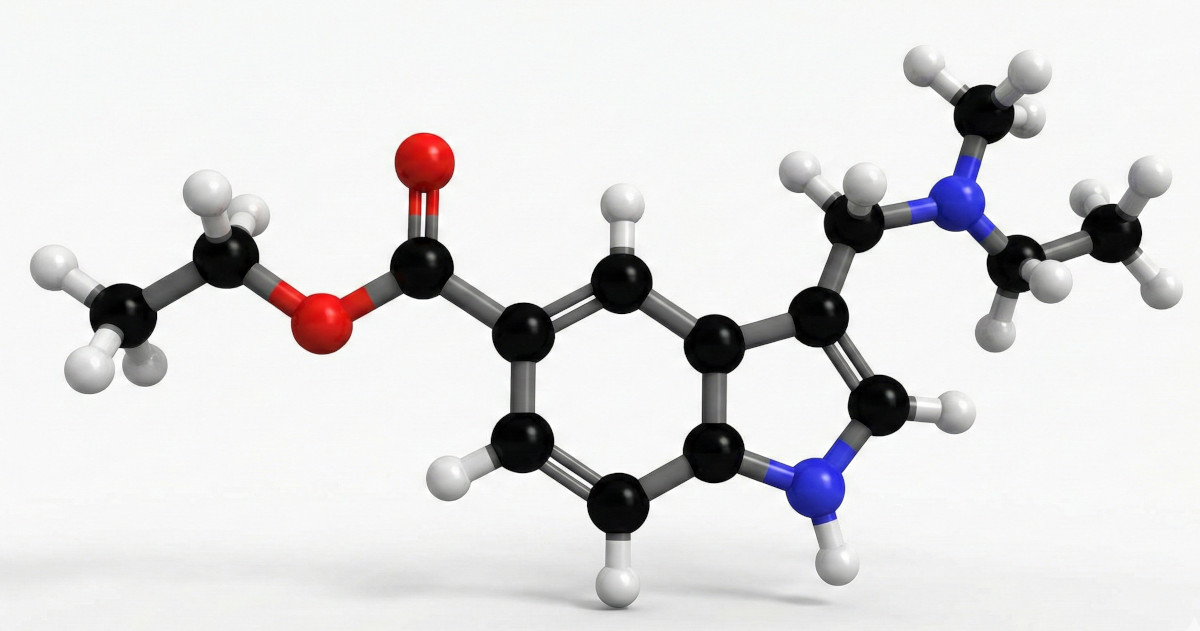
The case of 4-PrO-MET is a textbook example of this "legal alchemy". As an ester of a substance that often finds itself in a grey area (4-HO-MET), it benefits from a double layer of legal protection. In many European legal frameworks, if the "parent" substance is not strictly controlled as a Schedule I narcotic, its chemical derivatives are not automatically controlled either. However, some countries are beginning to apply analogue laws or family-based prohibitions, which may also cover these esters.
It is a legal loophole that laboratories exploit to their advantage. It is not that these substances are legal because they are safe or approved; they are "legal" (or more precisely, alegal) simply because bureaucracy is slower than organic chemistry.
This label is the final shield. By explicitly stating that the product "is not for human consumption", sellers attempt to circumvent public health and medicines laws. However, this places the user in a position of total vulnerability: as it is not a product intended for consumption, there are no quality controls, no traceability, no health guarantees (analysis, purity, presence of adulterants).
Furthermore, some suppliers explicitly state on their websites that they do not guarantee the legality of the product in the destination country, nor that shipments will not be held by customs.
It is important to clarify: the fact that possession is not an automatic criminal offence in certain jurisdictions does not mean it is an activity free from legal risk. Added to this are customs risks: packages may be opened, contents seized and, in some cases, lead to administrative sanctions or investigations for importing controlled substances or unauthorised medicines, even when the seller presented them as 'legal'.
The sale of these substances could constitute a criminal offence depending on the jurisdiction against Public Health, and judicial interpretations are hardening. What is today a "legal grey area" may tomorrow result in a conviction, especially given the speed with which Europe is attempting to close these gaps through new Analogue Laws.
So far we have talked about chemistry and law. But what happens when the "product" interacts with human biology? This is where the clean aesthetics of Instagram ads collide with pharmacological reality. With no medical leaflet or quality control, the user navigates blind.
The first major risk of synthetic tryptamines is the extreme precision they require. Unlike mushroom cultivation, where one works with grams of biomass, these substances are active in ranges so low that any minimal deviation can completely alter the experience.
In practice, we are talking about almost invisible quantities of powder, where a difference that cannot be appreciated with the naked eye can mark the transition from a manageable experience to a clearly overwhelming one.
The problem is compounded by an obvious technical limitation: domestic or recreational scales are not designed to measure reliably in this range. Their margin of error may be equal to or greater than the quantity being measured.
This turns dosing into an exercise in estimation rather than real control, introducing a level of risk that the marketing of these products rarely mentions.
| Substance | Structural Difference | Impact on Molecular Weight | Practical Implication |
|---|---|---|---|
| 4-HO-MET | Standard (Reference) | 100% Active Molecule | Calculation base (1x) |
| 4-PrO-MET | Adds Propionate Group | ~20% of the weight is additional mass before metabolisation | A greater quantity is estimated to be needed to match effects |
As we explained earlier, 4-PrO-MET carries a "chemical backpack" (the propionate group) that makes it heavier. This means that when weighing the powder, the weight of the chemical 'shield' is included. Therefore, 20 mg of 4-PrO-MET contains fewer active molecules than 20 mg of 4-HO-MET. It is a matter of basic stoichiometry: part of what is weighed on the scale is dead weight until the body processes it.
The risk arises when users consult old 4-HO-MET dosing guides and apply them to the new variant. This can generate a false perception of low potency or, in the worst case, lead to the assumption of a direct equivalence and an erroneous upward calculation, resulting in an unpredictable level of intensity that could resemble a 'bad trip'.
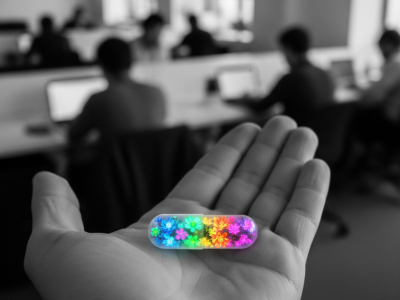
A concerning phenomenon detected recently is the sale of these tryptamines in the form of pressed tablets in neon colours and playful shapes (such as ducks or shields), identical to ecstasy (MDMA) tablets. This mimetic aesthetic increases the risk of confusing them with MDMA or other stimulants, or of someone in a party environment accidentally exchanging or consuming a tablet that actually contains a psychedelic tryptamine.
This creates a critical context risk. A user might acquire these "legal highs" expecting an empathetic stimulant for a party, only to find themselves 45 minutes later submerged in a psychedelic dissolution of reality, with severe visual distortions, in the middle of a crowd. Set & Setting (mental state and environment) is vital with psychedelics; these tablets invite users to ignore it.
Psychedelics, due to their potential to intensify emotions and perceptions, are terrible "social anaesthetics" in chaotic contexts: they can turn a socially demanding situation into an overwhelming experience within minutes.
Finally, we must appeal to biological common sense. Humanity has been co-evolving with Psilocybe mushrooms for millennia. We know their long-term effects and their acute organic toxicity in healthy humans is considered very low. In 2025, 4‑PrO‑MET began appearing with increasing visibility in advertising and promotional content on Instagram, which is striking for a substance with a clearly psychedelic profile. There are no studies on its chronic toxicity, its interactions with other medications, or its long-term effects on the cardiovascular system. Although we assume it is safe due to its kinship with psilocin, the scientific reality is that those who consume it today are the test subjects of an unregulated global experiment.
Furthermore, it is important to highlight a key distinction: although psilocybin is being massively studied for its therapeutic potential, no equivalent studies exist for 4-HO-MET. It is speculated that it may have potential due to its structural similarity, but to date, its use is purely experimental and recreational, lacking the clinical support that the mushroom is beginning to acquire.
Although no measure completely eliminates risk, there are practices aimed at significantly reducing the likelihood of severe adverse experiences:
From a technical standpoint, the design of derivatives like 4‑PrO‑MET shows just how far chemistry can modify a structure to change properties such as stability or form of presentation. But in practice, comparing "synthetic vs. natural" is not just about chemistry: it is about production chain, quality control, context of use and the type of relationship established with the substance.
For products marketed as "Magic Drops", sweets or tablets within the Research Chemicals circuit, it is usual that the user is buying a product without the same level of guarantees that would exist for a regulated medicine: information on real identity, purity, batch, traceability and external controls may be limited or non-existent. This does not imply that "everything is fake" or "everything is adulterated", but it does mean that uncertainty (and therefore risk) tends to be greater, especially when talking about compounds active in milligrams.
In the case of psilocybin mushrooms, the differentiating point is not only the biological origin, but the fact that the process tends to be more transparent for those who obtain them through traceable routes: one works with an organism whose growth and handling can be documented, and the final "material" does not usually reduce to a single isolated molecule. Even so, natural does not automatically equate to safe: potency varies, there is a margin of dosing error and context (set & setting) remains decisive.
The subjective experience also differs: with mushrooms one generally speaks of a more complete profile due to the presence of several compounds (in addition to psilocybin/psilocin), while with synthetic tryptamines the experience tends to be described as more focused, being a single specific molecule. This comparison, however, must be read with caution: much of these descriptions come from user reports and not from controlled clinical studies.
In summary, rather than a moral debate (natural = good, synthetic = bad), the useful difference for risk reduction is practical: regulation and controls, traceability, dose consistency and available evidence.
This article is for informational and harm reduction purposes. We do not encourage the consumption of illegal substances or the purchase of unregulated chemical products. Please inform yourself about the legislation in your country.
Related posts

Risks and contraindications of psilocybin
Published :
2026-03-07 21:12:32
Bad trips with psilocybin: how to avoid a bad trip
Published :
2025-04-24 10:47:01
What are psilocybin microdoses and how do they work
Published :
2025-11-17 11:53:06